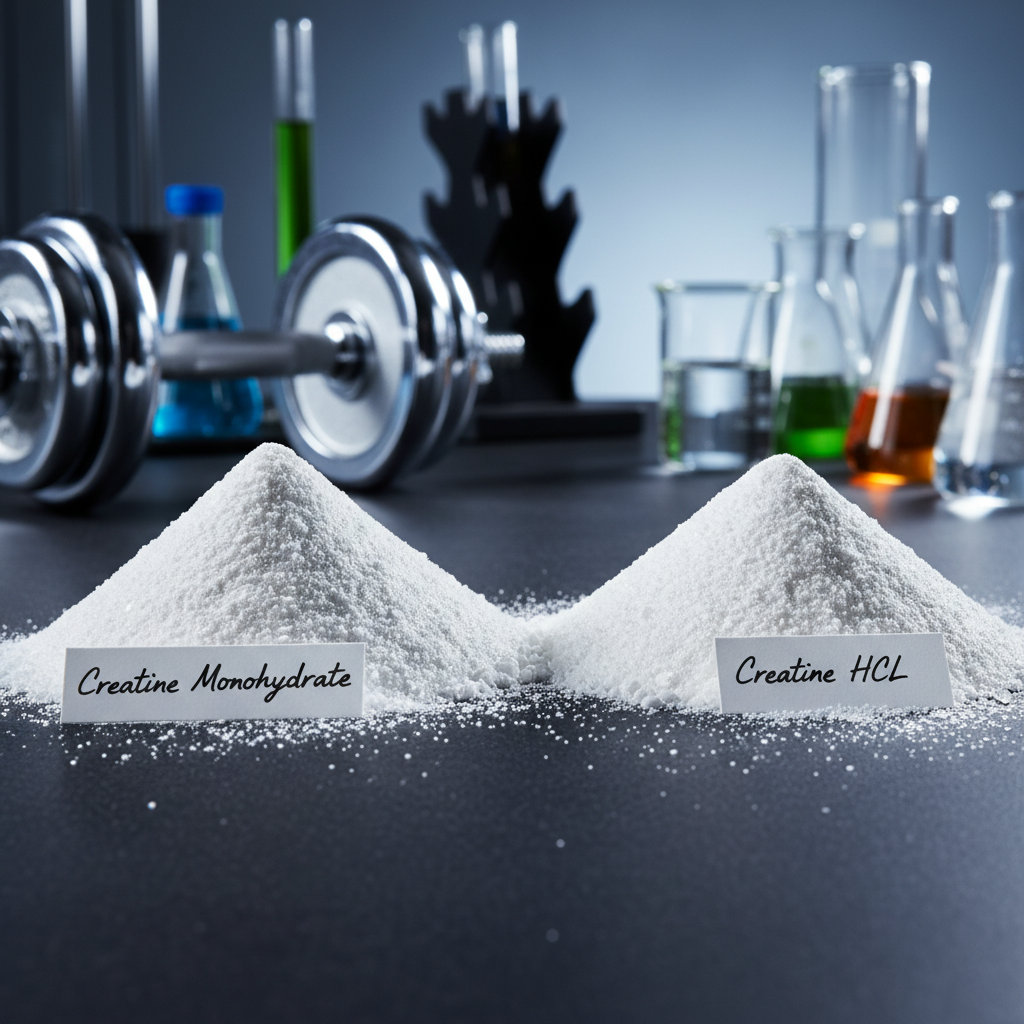
When it comes to creatine supplementation, two forms frequently enter the discussion: creatine monohydrate and creatine hydrochloride (HCl). For most individuals seeking to enhance athletic performance, strength, and muscle mass, creatine monohydrate remains the gold standard due to its extensive research backing, proven efficacy, and cost-effectiveness. Creatine HCl, while marketed for superior solubility and reduced gastrointestinal side effects, currently lacks the robust body of human evidence to definitively claim superiority over monohydrate in terms of performance benefits or bioavailability.
What Each Is and How It Works
Creatine is a naturally occurring organic compound found in muscle cells. It plays a crucial role in the production of adenosine triphosphate (ATP), the primary energy currency of the cell. Supplementing with creatine increases the body's phosphocreatine stores, which in turn allows for faster regeneration of ATP during high-intensity, short-duration activities like weightlifting or sprinting. This leads to improved power output, strength, and endurance, and can support muscle growth.
Creatine Monohydrate
Creatine monohydrate is the most studied and widely used form of creatine. It consists of a creatine molecule bound to a water molecule. This form has been the subject of hundreds of scientific studies over decades, establishing its safety and efficacy across various populations and athletic disciplines. When consumed, creatine monohydrate is absorbed into the bloodstream and transported to muscle cells, where it is converted into phosphocreatine.
Creatine Hydrochloride (HCl)
Creatine HCl is a newer form of creatine, where the creatine molecule is bound to a hydrochloride group. The primary claim for creatine HCl is its enhanced solubility in water compared to monohydrate. This increased solubility is theorized to lead to better absorption, requiring smaller doses and potentially minimizing gastrointestinal discomfort often associated with larger doses of monohydrate. However, while its solubility is indeed higher in a test tube, the practical implications for human absorption and efficacy are not as clearly established by independent research.
Bioavailability and Dose-Form
Bioavailability refers to the proportion of a drug or other substance which enters the circulation when introduced into the body and so is able to have an active effect. For creatine, this means how much of the ingested supplement actually reaches the muscle cells to be utilized.
Creatine Monohydrate Bioavailability and Dosing
Creatine monohydrate has excellent bioavailability, with studies showing that over 90% of an oral dose is absorbed into the bloodstream. The standard dosing protocol for creatine monohydrate often involves a 'loading phase' of 20 grams per day (divided into 4 doses of 5g) for 5-7 days, followed by a 'maintenance phase' of 3-5 grams per day. The loading phase is designed to rapidly saturate muscle creatine stores, while the maintenance phase keeps them elevated. Some individuals opt to skip the loading phase and simply take 3-5 grams daily, which will also saturate muscle stores, albeit over a longer period (typically 3-4 weeks).
Creatine HCl Bioavailability and Dosing
The main selling point of creatine HCl is its purported superior bioavailability due to its high solubility. The theory is that because it dissolves better in water, it is more readily absorbed by the intestines and less likely to cause stomach upset or bloating. Manufacturers often recommend much smaller doses for creatine HCl, typically 0.75-1.5 grams per day, sometimes suggesting that a loading phase is unnecessary. While creatine HCl does exhibit higher solubility in laboratory settings, robust human trials directly comparing the bioavailability of creatine HCl to creatine monohydrate and demonstrating a significant advantage in muscle uptake or performance outcomes are limited. Most claims regarding its superior absorption or efficacy at lower doses are based on theoretical solubility or anecdotal reports rather than extensive peer-reviewed human research.
Evidence by Outcome
The scientific evidence supporting the benefits of creatine is overwhelmingly in favor of creatine monohydrate. Its efficacy has been demonstrated across a wide range of outcomes.
Creatine Monohydrate Evidence
- Strength and Power: Numerous studies confirm that creatine monohydrate significantly increases maximal strength (e.g., 1-rep max) and power output during short bursts of intense exercise.
- Muscle Mass: Consistent supplementation, especially when combined with resistance training, is associated with increased lean body mass and muscle hypertrophy. This is partly due to increased training volume and cellular hydration.
- Exercise Performance: It improves performance in repeated bouts of high-intensity exercise, such as multiple sets of squats or sprints.
- Cognitive Function: Emerging research suggests potential cognitive benefits, particularly in situations of sleep deprivation or mental fatigue, though more research is needed in this area.
- Bone Health: Some preliminary studies indicate a potential role in supporting bone mineral density, especially in older adults.
The sheer volume and consistency of research make creatine monohydrate one of the most effective and well-understood supplements for enhancing athletic performance and body composition.
Creatine HCl Evidence
In contrast to monohydrate, the scientific evidence specifically for creatine HCl's efficacy in human performance is considerably less robust. While creatine HCl is still creatine and will likely confer some benefits, direct comparative studies showing it to be superior or even equivalent to monohydrate at its recommended lower doses are scarce. Many of the studies cited by manufacturers are either preclinical (in vitro or animal studies) or small, non-peer-reviewed human trials. Without more independent, well-designed human research, it is difficult to definitively state that creatine HCl offers unique or superior benefits over creatine monohydrate for strength, power, or muscle growth.
Safety and Interactions
Both creatine monohydrate and creatine HCl are generally considered safe for healthy individuals when used appropriately. Decades of research on creatine monohydrate have established its safety profile.
Creatine Monohydrate Safety
The most common side effects reported with creatine monohydrate are gastrointestinal discomfort (such as stomach cramps, diarrhea, or bloating) and water retention. These effects are often dose-dependent and more common during the loading phase with higher doses. Micronized creatine monohydrate, which has smaller particles, may help reduce some GI issues by improving solubility. The myth that creatine causes kidney or liver damage has been largely debunked by scientific literature, showing no adverse effects on kidney or liver function in healthy individuals at recommended doses. However, individuals with pre-existing kidney conditions should consult a healthcare professional before use.
Creatine HCl Safety
Creatine HCl is marketed as having fewer gastrointestinal side effects due to its higher solubility and lower required doses. While anecdotal reports often support this claim, the limited number of human studies means its long-term safety profile is not as extensively documented as monohydrate. Given that it is still creatine, it is expected to have a similar safety profile, but with potentially fewer GI issues for sensitive individuals. As with any supplement, it's wise to start with a lower dose to assess tolerance.
Who Should Pick Which
Choosing between creatine monohydrate and HCl largely depends on individual priorities, budget, and tolerance.
Choose Creatine Monohydrate if:
- You prioritize proven efficacy and extensive research: Monohydrate is the most studied and effective form.
- You are budget-conscious: It is significantly more affordable per serving than HCl.
- You don't experience significant GI issues with monohydrate: Most people tolerate it well.
- You want the most reliable option: It's the gold standard for a reason.
Choose Creatine HCl if:
- You experience significant gastrointestinal discomfort or bloating with creatine monohydrate: The higher solubility and lower doses of HCl might mitigate these issues.
- You are willing to pay a premium for potential convenience: HCl often mixes more easily and may not require a loading phase.
- You are looking for an alternative and are not concerned about the lack of extensive comparative human research: While it's still creatine, its specific advantages over monohydrate are less substantiated.
Practical Buying Notes
When purchasing creatine, regardless of the form, look for products from reputable manufacturers that provide third-party testing for purity and absence of contaminants. This ensures you are getting a high-quality product.
For creatine monohydrate supplements, consider micronized versions, which dissolve better and may reduce stomach upset. Brands that use Creapure® creatine monohydrate are often considered a benchmark for purity and quality, as Creapure® is a patented form manufactured in Germany known for its high standards.
For creatine HCl supplements, be aware that they typically come at a higher price point per gram. Given the less extensive research, it's even more important to choose a trusted brand. While the lower dosage might seem appealing, factor in the cost per serving to compare it accurately with monohydrate.
Ultimately, the decision between creatine monohydrate and HCl comes down to a balance of scientific evidence, personal tolerance, and cost. For the vast majority of users, creatine monohydrate offers the best combination of proven effectiveness, safety, and value. Creatine HCl serves as a viable alternative for those who genuinely struggle with monohydrate's side effects, but it's important to manage expectations regarding its comparative benefits.