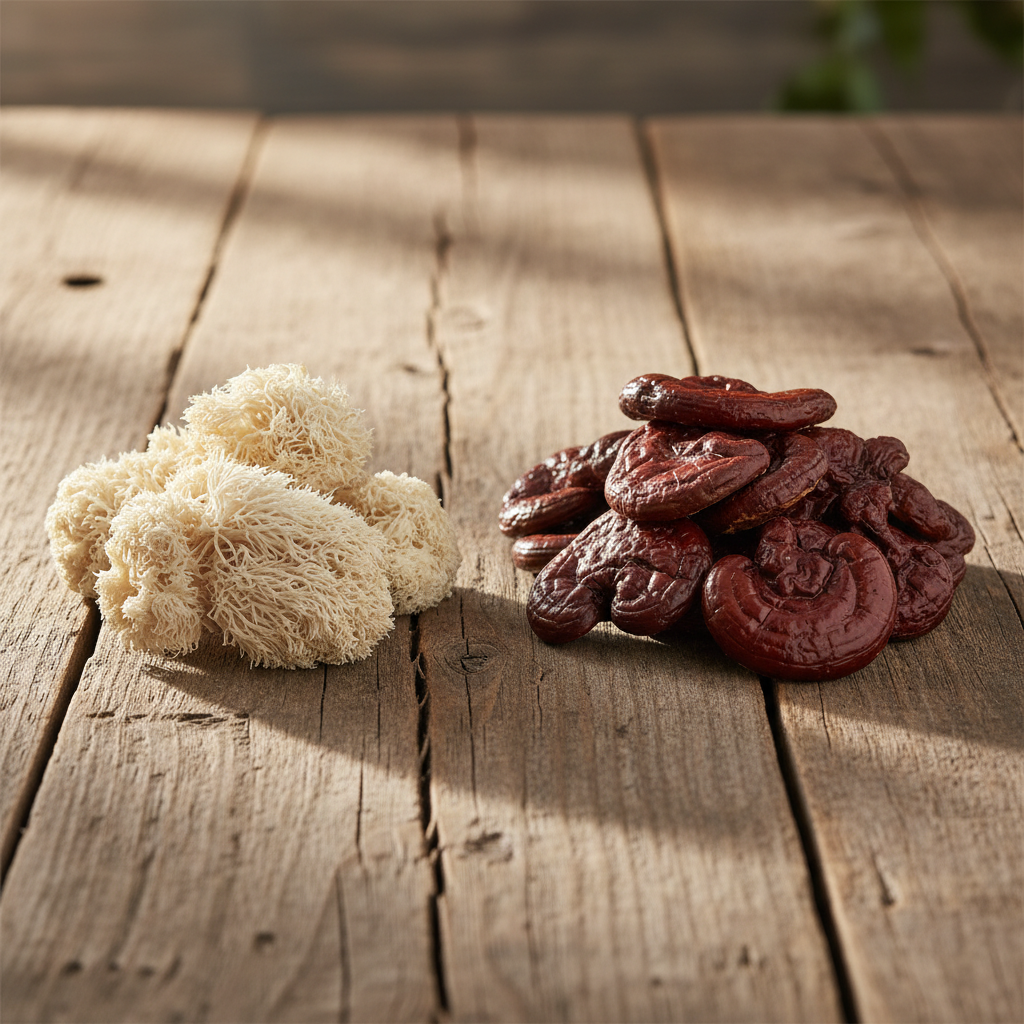
When navigating the world of functional mushrooms, two names frequently emerge as powerhouses of health benefits: Lions Mane and Reishi. While both are revered in traditional medicine and increasingly studied in modern science, they offer distinct profiles of effects. Generally, Lions Mane is sought after for its potential to support cognitive function and nerve health, making it a favorite for brain optimization. Reishi, on the other hand, is celebrated for its adaptogenic qualities, promoting stress resilience, immune system balance, and restful sleep. Understanding these fundamental differences is key to making an informed choice for your specific health goals.
What Each Is and How It Works
Both Lions Mane and Reishi are fungi with a long history of use in traditional Eastern medicine, particularly in China and Japan. Modern science is now exploring the bioactive compounds responsible for their reputed benefits.
Lions Mane (Hericium erinaceus)
Lions Mane is a unique-looking mushroom, resembling a white, shaggy waterfall of icicles. Its primary claim to fame lies in its potential neurotrophic properties. The key active compounds in Lions Mane are hericenones, found in the fruiting body, and erinacines, found in the mycelium. These compounds are believed to stimulate the production of Nerve Growth Factor (NGF) in the brain. NGF is a protein that plays a crucial role in the maintenance, survival, and regeneration of neurons. By supporting NGF, Lions Mane may contribute to improved cognitive function, memory, focus, and potentially aid in nerve repair. For a deeper dive into its benefits, explore our article on Lions Mane mushroom.
Reishi (Ganoderma lucidum)
Reishi, often referred to as the 'mushroom of immortality' or 'king of mushrooms,' has a distinctive reddish-brown, kidney-shaped cap with a glossy appearance. Reishi's broad spectrum of benefits is attributed to its rich array of bioactive compounds, primarily triterpenes and polysaccharides (especially beta-glucans). Triterpenes are responsible for Reishi's adaptogenic properties, helping the body manage stress and promoting a sense of calm. They may also contribute to its anti-inflammatory effects. Polysaccharides, particularly beta-glucans, are well-known for their immune-modulating capabilities, helping to balance and strengthen the immune system. Reishi does not directly stimulate NGF like Lions Mane but supports overall systemic balance, which can indirectly benefit cognitive function by reducing stress and improving sleep. For more detailed information, consider reading our comprehensive guide on Reishi mushroom.
Evidence by Outcome
While both mushrooms are beneficial, their primary areas of scientific focus and traditional use differ significantly.
Cognitive Function and Nerve Health
Lions Mane: This is where Lions Mane truly shines. Multiple studies, including some human trials, suggest that Lions Mane may improve cognitive function, particularly in older adults with mild cognitive impairment. The proposed mechanism involves the stimulation of NGF, which can support neuronal growth and protection. Research indicates potential benefits for memory, focus, and even mood. Evidence is preliminary but promising for its role in neuroprotection and cognitive enhancement.
Reishi: Reishi's impact on cognition is more indirect. By acting as an adaptogen, it helps reduce stress and anxiety, which can certainly improve mental clarity and focus. Better sleep, a known benefit of Reishi, also contributes significantly to cognitive performance. However, Reishi does not have the same direct neurotrophic properties as Lions Mane.
Immune Support
Lions Mane: While not its primary focus, Lions Mane does contain polysaccharides that have immune-modulating effects. It may help balance gut microbiota, which is intrinsically linked to immune health. Some studies suggest it can enhance the activity of certain immune cells.
Reishi: Reishi is a powerhouse for immune support. Its beta-glucans are potent immune modulators, meaning they can help regulate the immune system, either boosting it when it's underactive or calming it when it's overactive. This adaptogenic effect on the immune system is one of Reishi's most celebrated benefits, making it popular for general wellness and seasonal immune challenges.
Stress Reduction and Sleep
Lions Mane: Lions Mane is not typically used as a primary stress reducer or sleep aid. While improved cognitive function and a sense of well-being might indirectly reduce stress for some, it lacks the direct adaptogenic and calming effects of Reishi.
Reishi: This is another area where Reishi excels. Its triterpenes are believed to interact with the body's stress response systems, helping to normalize cortisol levels and promote relaxation. Many users report improved sleep quality, reduced anxiety, and a greater sense of calm after consistent Reishi supplementation. It's often recommended for individuals experiencing chronic stress or sleep disturbances.
Antioxidant and Anti-inflammatory Properties
Both: Both Lions Mane and Reishi contain various compounds with antioxidant and anti-inflammatory properties. These benefits contribute to overall cellular health and may help protect the body from oxidative stress and chronic inflammation, which are underlying factors in many health conditions.
Bioavailability and Dose-Form
The efficacy of both Lions Mane and Reishi supplements largely depends on their processing and form. Both mushrooms have tough cell walls made of chitin, which makes their beneficial compounds difficult for the human digestive system to access. Therefore, extraction methods are crucial.
Extraction: Hot water extraction is common for polysaccharides (like beta-glucans), while dual extraction (hot water and alcohol) is often used to extract both water-soluble polysaccharides and alcohol-soluble triterpenes (especially important for Reishi) and hericenones/erinacines (for Lions Mane). Look for products that specify their extraction method.
Forms: Both are available in various forms:
- Powder: Often the most cost-effective, can be mixed into drinks or food.
- Capsules: Convenient and provide precise dosing.
- Tinctures: Alcohol-based liquid extracts, offering quick absorption.
Standardization: For Reishi, look for standardization to polysaccharides (e.g., >20-30% beta-glucans) and triterpenes (e.g., >2-6%). For Lions Mane, some products may standardize for polysaccharides, but specific standardization for hericenones or erinacines is less common in consumer products, though desirable.
Dosing: Dosing varies widely depending on the extract concentration and desired effect. Typical daily doses for concentrated extracts range from 500 mg to 2000 mg. Always follow the manufacturer's recommendations or consult a healthcare professional.
Safety and Interactions
Both Lions Mane and Reishi are generally considered safe for most healthy adults when consumed in appropriate doses. Side effects are rare and usually mild.
Lions Mane Safety
Reported side effects are minimal, primarily consisting of mild digestive upset in sensitive individuals. There are no well-documented significant drug interactions. However, as with any supplement, individuals with pre-existing medical conditions or those taking prescription medications should consult a healthcare provider.
Reishi Safety
Reishi is also well-tolerated. Some individuals might experience mild digestive upset, dry mouth, or skin rash. More importantly, Reishi may have anticoagulant properties, meaning it could potentially thin the blood. Therefore, individuals taking anticoagulant medications (blood thinners) or those with bleeding disorders should exercise caution and consult their doctor before use. It may also interact with immunosuppressants due to its immune-modulating effects. Pregnant or breastfeeding women should avoid Reishi due to insufficient safety data.
General Precaution: Always start with a lower dose to assess tolerance. If you experience any adverse reactions, discontinue use and consult a healthcare professional. It's also wise to discuss any new supplement with your doctor, especially if you have underlying health conditions or are on medication.
Who Should Pick Which
The choice between Lions Mane and Reishi largely depends on your primary health objectives.
Choose Lions Mane if you are looking for:
- Cognitive Enhancement: If your goal is to improve memory, focus, mental clarity, or overall brain health.
- Nerve Support: If you are interested in supporting nerve regeneration or protection.
- Students and Professionals: Ideal for those seeking to optimize mental performance during demanding periods.
- Aging Adults: For individuals looking to maintain or improve cognitive function as they age.
Choose Reishi if you are looking for:
- Stress Reduction and Relaxation: If you experience chronic stress, anxiety, or difficulty relaxing.
- Improved Sleep Quality: If you struggle with insomnia or want to achieve more restful sleep.
- Immune System Modulation: For general immune support, especially during seasonal changes or periods of vulnerability.
- Overall Well-being and Balance: As an adaptogen, Reishi helps the body maintain homeostasis and resilience against various stressors.
Can You Take Them Together?
Yes, many people choose to combine Lions Mane and Reishi to leverage their synergistic benefits. Lions Mane can target cognitive and nerve health, while Reishi can address stress, sleep, and immune balance, creating a comprehensive approach to well-being. There are no known contraindications for stacking these two mushrooms.
Practical Buying Notes
When purchasing Lions Mane or Reishi supplements, quality is paramount to ensure efficacy and safety. Here are some key considerations:
- Source and Cultivation: Look for mushrooms grown organically and sustainably. Wild-harvested mushrooms can be great but ensure they are from clean environments.
- Fruiting Body vs. Mycelium: While both contain beneficial compounds, the fruiting body generally has a higher concentration of the most sought-after compounds (e.g., triterpenes in Reishi, hericenones in Lions Mane). Some products use mycelium grown on grain, which can dilute the active compounds with grain starch. Look for products that specify '100% fruiting body' or clearly state the composition.
- Extraction Method: As discussed, proper extraction is crucial. For Reishi, a dual extract (hot water and alcohol) is often preferred to capture both polysaccharides and triterpenes. For Lions Mane, hot water extraction is common, but dual extraction may also be used to capture a broader spectrum of compounds.
- Third-Party Testing: Reputable brands will provide third-party lab testing results for purity (absence of heavy metals, pesticides, microbes) and potency (concentration of active compounds like beta-glucans).
- Transparency: Choose brands that are transparent about their sourcing, processing, and testing methods.
- Form: Decide whether powder, capsules, or tinctures best fit your lifestyle and preferences.
By carefully considering these factors, you can select high-quality Lions Mane and Reishi supplements that are more likely to deliver the desired health benefits.