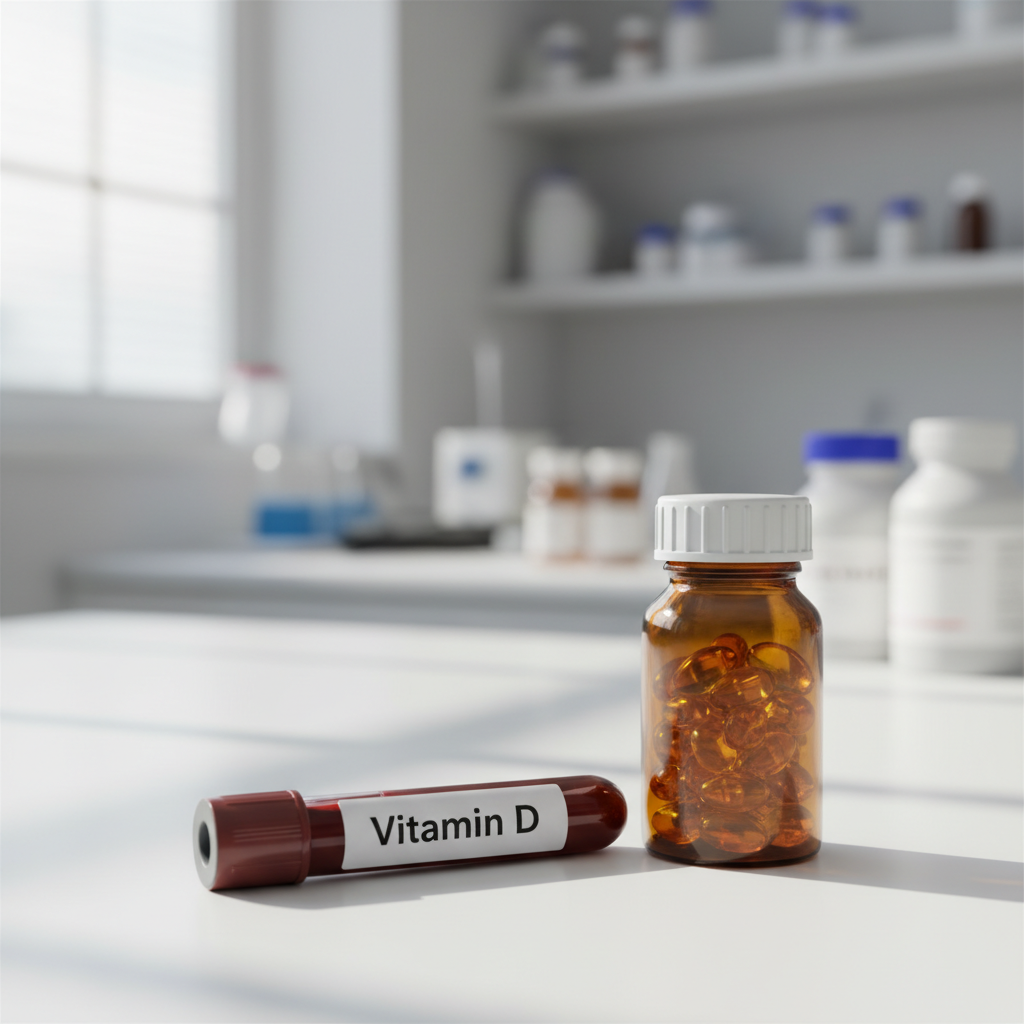
A vitamin D blood test, specifically measuring 25-hydroxyvitamin D [25(OH)D], is a crucial diagnostic tool used to assess the amount of vitamin D in your body. This test helps healthcare providers determine if you have adequate levels, or if you are experiencing insufficiency or deficiency, which can have significant implications for bone health, immune function, and overall well-being. Understanding your results is key to taking informed steps to optimize your vitamin D status and support various physiological processes.
What is Vitamin D and Why is it Important?
Vitamin D is a fat-soluble vitamin that plays a critical role in numerous bodily functions. Often referred to as the 'sunshine vitamin,' it is unique because our bodies can synthesize it when skin is exposed to sunlight. There are two main forms: vitamin D2 (ergocalciferol), found in some plants and fortified foods, and vitamin D3 (cholecalciferol), produced in the skin and found in animal-sourced foods and most supplements. Vitamin D3 is generally considered more effective at raising and maintaining blood levels of vitamin D.
The primary function of vitamin D is to regulate calcium and phosphate homeostasis, which is essential for strong bones and teeth. It promotes the absorption of calcium in the gut and helps maintain adequate serum calcium and phosphate concentrations to enable normal mineralization of bone. Without sufficient vitamin D, bones can become thin, brittle, or misshapen, leading to conditions like rickets in children and osteomalacia in adults.
Beyond bone health, vitamin D is involved in many other physiological processes. It plays a significant role in immune system function, helping to modulate both innate and adaptive immunity. Research suggests its involvement in cell growth, neuromuscular function, and reducing inflammation. While evidence is still emerging, adequate vitamin D levels are associated with a lower risk of various chronic diseases, though more robust human evidence is needed to establish causal links for many of these associations.
Understanding the Vitamin D Blood Test: 25(OH)D
When you get a vitamin D blood test, the most common and accurate measurement is for 25-hydroxyvitamin D, often abbreviated as 25(OH)D or calcidiol. This is the main circulating form of vitamin D in your blood and serves as the best indicator of your body's overall vitamin D stores. Both vitamin D2 and D3 are converted in the liver to 25(OH)D, which then circulates in the bloodstream with a relatively long half-life, making it a stable marker of your vitamin D status over several weeks.
While 25(OH)D is the storage form, the biologically active form of vitamin D is 1,25-dihydroxyvitamin D, also known as 1,25(OH)2D or calcitriol. This active form is produced primarily in the kidneys from 25(OH)D. However, measuring 1,25(OH)2D is generally not recommended for assessing vitamin D status because its levels are tightly regulated by parathyroid hormone (PTH) and phosphate. In early stages of vitamin D deficiency, 1,25(OH)2D levels may remain normal or even elevated due to increased PTH, which stimulates its production, making it an unreliable indicator of overall stores.
The vitamin D blood test is a simple procedure involving a standard blood draw, typically from a vein in your arm. It usually does not require any special preparation, such as fasting, though your healthcare provider may give specific instructions based on other tests being performed simultaneously. The collected blood sample is then sent to a laboratory for analysis, and results are usually available within a few days to a week.
Interpreting Your Results: Optimal Levels and Deficiency
Interpreting your 25(OH)D blood test results involves understanding the generally accepted ranges for sufficiency, insufficiency, and deficiency. While there can be slight variations in reference ranges between different laboratories and medical organizations, the following guidelines are widely used:
- Deficiency: Levels below 20 ng/mL (50 nmol/L)
- Insufficiency: Levels between 20-29 ng/mL (50-74 nmol/L)
- Sufficiency: Levels between 30-100 ng/mL (75-250 nmol/L)
- Potentially Harmful: Levels above 100 ng/mL (250 nmol/L)
It's important to note that some experts suggest that optimal levels for certain health benefits might be at the higher end of the sufficiency range, perhaps 40-60 ng/mL (100-150 nmol/L). However, maintaining levels significantly above 60 ng/mL without specific medical guidance is generally not recommended, as the benefits are not clearly established and potential risks, though rare, may increase at very high levels.
A vitamin D deficiency can lead to significant health problems. In children, severe deficiency causes rickets, characterized by soft, weak bones and skeletal deformities. In adults, it can result in osteomalacia, which causes bone pain and muscle weakness, and contributes to osteoporosis, increasing the risk of fractures. Insufficient levels may also be associated with a weakened immune response, fatigue, and other non-specific symptoms. Always discuss your specific results with a healthcare professional to understand their implications for your individual health.
Factors Affecting Vitamin D Levels
Several factors can significantly influence your body's vitamin D levels, making it a highly individualized nutrient. Understanding these factors can help explain why some individuals are more prone to deficiency than others.
- Sun Exposure: This is the most significant natural source of vitamin D. Factors like geographic latitude, season, time of day, cloud cover, air pollution, and the use of sunscreen all impact the amount of UV-B radiation that reaches your skin and, consequently, the amount of vitamin D synthesized. People living at higher latitudes, especially during winter months, often have lower levels.
- Skin Pigmentation: Melanin, the pigment responsible for skin color, acts as a natural sunscreen. Individuals with darker skin tones require significantly more sun exposure than those with lighter skin to produce the same amount of vitamin D.
- Age: As people age, their skin's ability to synthesize vitamin D from sun exposure decreases. Older adults also tend to spend less time outdoors, further contributing to lower levels.
- Dietary Intake: While limited, some foods naturally contain vitamin D, such as fatty fish (salmon, mackerel, tuna) and fish liver oils. Many foods, like milk, cereals, and orange juice, are fortified with vitamin D. However, it's often challenging to obtain sufficient amounts solely through diet.
- Body Weight: Obesity is associated with lower circulating 25(OH)D levels. This is thought to be due to the sequestration of vitamin D in adipose (fat) tissue, making it less bioavailable.
- Malabsorption Conditions: Certain medical conditions that impair fat absorption, such as Crohn's disease, celiac disease, cystic fibrosis, and some types of bariatric surgery, can reduce the absorption of dietary vitamin D.
- Kidney and Liver Disease: The liver converts vitamin D into 25(OH)D, and the kidneys convert 25(OH)D into the active form, 1,25(OH)2D. Impaired function of these organs can disrupt vitamin D metabolism.
- Medications: Some medications, including certain anticonvulsants, glucocorticoids, antifungals, and HIV treatments, can interfere with vitamin D metabolism or increase its breakdown, potentially leading to lower levels.
When to Consider a Vitamin D Test
A vitamin D blood test is not typically part of routine annual physicals for everyone, but it is highly recommended for individuals at increased risk of deficiency or those presenting with symptoms. You should consider getting your vitamin D levels checked if you:
- Exhibit Symptoms of Deficiency: These can include chronic fatigue, bone pain, muscle weakness or aches, frequent infections, or mood changes.
- Have Limited Sun Exposure: This applies to individuals who spend most of their time indoors, live in northern latitudes, use high SPF sunscreen regularly, or have occupations that limit outdoor time.
- Have Darker Skin: Higher melanin content reduces the skin's ability to produce vitamin D from sunlight.
- Are an Older Adult: The skin's efficiency in producing vitamin D decreases with age.
- Are Obese: As mentioned, excess body fat can sequester vitamin D, making it less available.
- Have Certain Medical Conditions: This includes malabsorption disorders (e.g., celiac disease, Crohn's disease), kidney or liver disease, osteoporosis, hyperparathyroidism, or granuloma-forming disorders.
- Are Taking Certain Medications: Some drugs can interfere with vitamin D metabolism.
- Are Pregnant or Breastfeeding: Adequate vitamin D is crucial for both mother and baby.
- Are Monitoring Supplementation: If you are already taking vitamin D supplements, periodic testing can help ensure you are reaching and maintaining target levels without exceeding safe upper limits.
Always consult with your healthcare provider to determine if a vitamin D test is appropriate for you based on your individual health profile and risk factors.
Preparing for Your Vitamin D Test
One of the advantages of the 25(OH)D blood test is that it generally requires very little, if any, special preparation. Unlike some other blood tests that require fasting, a vitamin D test typically does not. You can usually eat and drink normally before your appointment.
However, it is always a good practice to inform your doctor or the lab technician about any medications, over-the-counter drugs, or dietary supplements you are currently taking. This includes any vitamin D supplements, multivitamins, or other supplements that might contain vitamin D. While these usually don't interfere with the test itself, knowing about them can help your healthcare provider interpret your results more accurately, especially if you are being tested to monitor the effectiveness of supplementation.
If your doctor has ordered other blood tests to be done at the same time, some of those might require fasting. In such cases, your doctor or the lab will provide specific instructions regarding fasting or any other necessary preparations. Always follow the guidance given by your healthcare professional to ensure the accuracy of all your test results.
Next Steps After Your Test: Supplementation and Lifestyle
Once you receive your vitamin D blood test results, the next steps will depend on your specific levels. If your results indicate deficiency or insufficiency, your healthcare provider will likely recommend a strategy to raise your vitamin D levels. This typically involves supplementation, often with vitamin D3 (cholecalciferol), as it is more effective than D2 at increasing serum 25(OH)D concentrations.
The dosage of vitamin D supplementation will be tailored to your individual needs, considering your current levels, body weight, and other health factors. For significant deficiencies, a higher initial 'loading dose' may be prescribed for a period, followed by a lower 'maintenance dose.' It is crucial to follow your doctor's recommendations regarding dosage and duration, as taking excessively high doses without medical supervision can lead to vitamin D toxicity, though this is rare.
In addition to supplements, your doctor may discuss lifestyle adjustments. Increasing safe sun exposure, particularly during peak UV-B hours (midday), can help, but always balance this with skin cancer prevention. Incorporating more vitamin D-rich foods into your diet, such as fatty fish, fortified milk, and cereals, can also contribute, though dietary sources alone are often insufficient to correct a deficiency.
After starting supplementation, your doctor may recommend a follow-up blood test, typically after 2-3 months, to assess if your levels have reached the target range. This re-testing helps ensure the effectiveness of the treatment plan and allows for adjustments if necessary. Maintaining optimal vitamin D levels is an ongoing process, and periodic monitoring may be advised, especially for individuals with chronic risk factors.
The Role of Vitamin D Supplementation
For many individuals, especially those with limited sun exposure or specific risk factors, vitamin D supplementation becomes a practical and effective way to achieve and maintain adequate levels. As previously mentioned, vitamin D3 (cholecalciferol) is generally preferred over vitamin D2 (ergocalciferol) due to its superior efficacy in raising serum 25(OH)D levels. Supplements are widely available in various forms, including capsules, tablets, liquids, and chewables.
Typical daily maintenance doses for adults range from 600 to 2000 International Units (IU), though higher doses may be recommended by a healthcare professional to correct a deficiency. For instance, individuals with diagnosed deficiency might be prescribed doses ranging from 1000 IU to 10,000 IU daily for a period, or even higher weekly or monthly doses, under strict medical guidance. The tolerable upper intake level (UL) for adults is generally set at 4000 IU per day, but some research suggests that higher intakes may be safe for certain populations under medical supervision. However, exceeding 10,000 IU/day for prolonged periods without monitoring can increase the risk of toxicity.
Vitamin D toxicity, or hypervitaminosis D, is rare and almost always results from excessive supplementation, not from sun exposure or diet. Symptoms of toxicity are primarily due to hypercalcemia (high blood calcium levels) and can include nausea, vomiting, weakness, frequent urination, and in severe cases, kidney problems and bone pain. It's also important to consider cofactors for vitamin D metabolism. For example, adequate magnesium intake is crucial for activating vitamin D, and Vitamin K is often discussed in conjunction with vitamin D for bone and cardiovascular health, though more research is needed on their synergistic effects.
Always consult with a healthcare professional before starting any new supplement regimen, especially high-dose vitamin D, to ensure it is appropriate for your health needs and to avoid potential interactions or adverse effects. Regular monitoring of blood levels is key to safe and effective supplementation.