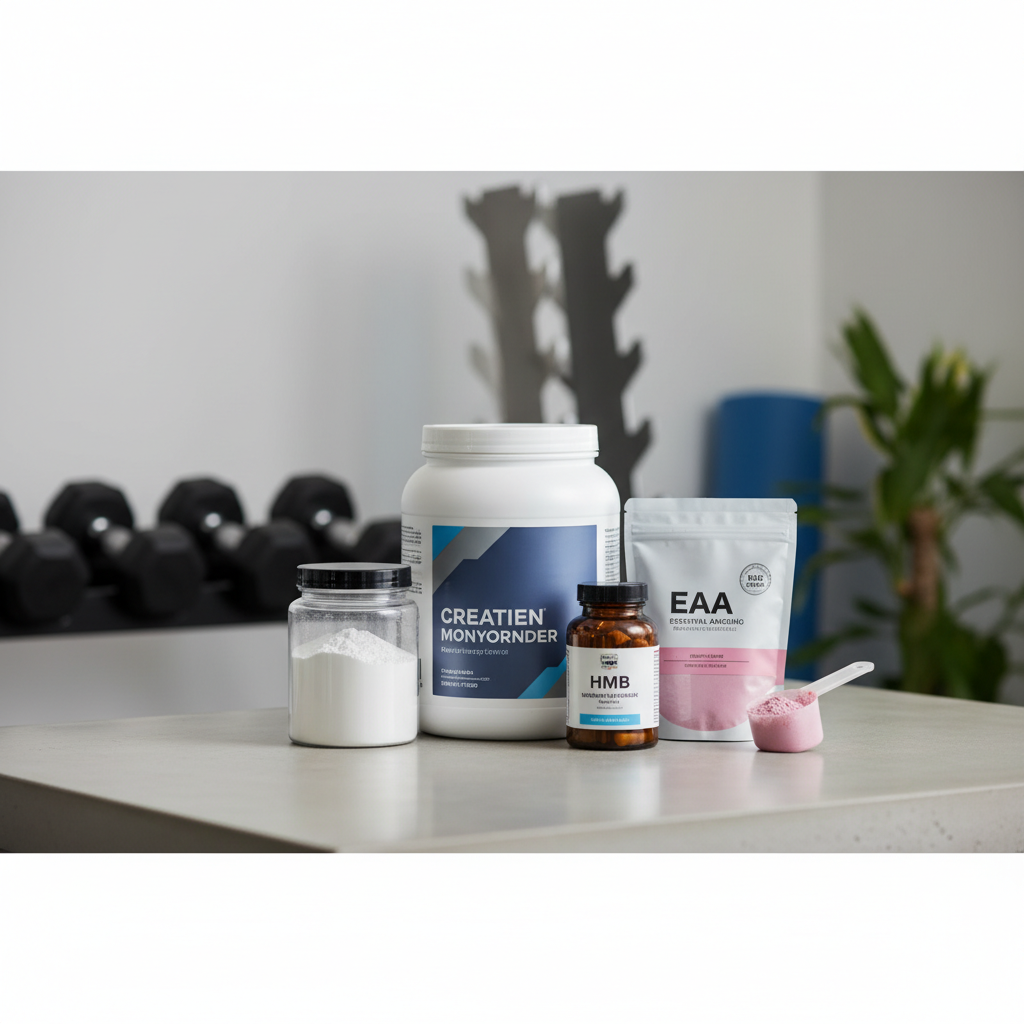
Maintaining muscle mass is crucial not only for athletic performance and aesthetic goals but also for overall health, metabolic function, and quality of life, especially as we age. While diet and exercise form the foundation of muscle preservation, certain dietary supplements can play a supportive role. The best muscle preservation supplements, including protein powder, creatine monohydrate, HMB, and essential amino acids (EAAs), work through distinct mechanisms to help maintain muscle mass and strength, particularly during periods of calorie deficit, intense training, or aging.
Understanding Muscle Preservation and Why it Matters
Muscle preservation refers to the strategies and processes aimed at preventing the loss of muscle mass and strength. This is particularly important in several scenarios: during periods of intentional weight loss (calorie deficit), when recovering from injury or illness that leads to inactivity, during intense training phases where overtraining can occur, and as a natural part of aging (sarcopenia). Muscle loss can lead to decreased strength, reduced metabolic rate, increased risk of injury, and a decline in overall functional capacity.
The body is in a constant state of muscle protein turnover, meaning muscle proteins are continually being broken down and synthesized. To preserve muscle, the rate of muscle protein synthesis (MPS) must at least match, if not exceed, the rate of muscle protein breakdown (MPB). Factors like adequate protein intake, resistance training, and sufficient rest are primary drivers of MPS. Supplements can act as adjunctive tools to further tip this balance in favor of preservation.
Our Methodology for Selecting Top Supplements
When identifying the best muscle preservation supplements, we focus on ingredients with robust scientific evidence supporting their efficacy, safety, and practical application. Our selection criteria include:
- Evidence-Based Efficacy: Prioritizing supplements with multiple human clinical trials demonstrating a positive impact on muscle protein synthesis, reduction in muscle protein breakdown, or preservation of strength and lean mass.
- Mechanism of Action: Understanding how each supplement works at a physiological level to support muscle preservation.
- Safety Profile: Ensuring the supplement is generally recognized as safe for healthy individuals at recommended dosages.
- Practicality: Considering ease of use, availability, and cost-effectiveness.
- Relevance: Focusing on supplements most relevant to individuals actively seeking to preserve muscle mass under various conditions.
Based on these criteria, we have identified several key supplements that stand out for their role in muscle preservation.
Top Muscle Preservation Supplements
1. Protein Powder (Whey, Casein, Plant-Based)
Mechanism: Protein is the fundamental building block of muscle. Consuming adequate protein provides the essential amino acids necessary for muscle protein synthesis (MPS). Different types of protein powders offer varying absorption rates and amino acid profiles. Whey protein is fast-digesting and rich in BCAAs, particularly leucine, making it excellent for post-workout recovery and stimulating MPS. Casein is slow-digesting, providing a sustained release of amino acids, which can be beneficial during longer periods without food, such as overnight. Plant-based proteins (e.g., pea, rice, soy) can also be effective, especially when combined to ensure a complete amino acid profile.
Dose: General recommendations for muscle preservation range from 1.6 to 2.2 grams of protein per kilogram of body weight per day, distributed across meals. A typical serving of protein powder is 20-30 grams.
Safety: Generally safe for healthy individuals. High doses may cause digestive discomfort in some. Individuals with kidney issues should consult a doctor before significantly increasing protein intake. Explore different types and their benefits on our Protein ingredient page.
Who it Suits: Anyone looking to increase their daily protein intake, especially those with high training volumes, during calorie restriction, or individuals struggling to meet protein needs through whole foods alone.
2. Creatine Monohydrate
Mechanism: Creatine is a naturally occurring compound that plays a critical role in energy production during high-intensity, short-duration activities. By increasing phosphocreatine stores in muscles, creatine helps regenerate ATP (adenosine triphosphate), the primary energy currency of cells. While primarily known for enhancing strength and power, creatine also supports muscle preservation by increasing cell hydration, reducing muscle damage, and potentially influencing gene expression related to muscle growth. It can help maintain training intensity and strength output even during periods of calorie deficit, thereby indirectly preserving muscle mass.
Dose: A common protocol involves a loading phase of 20 grams per day (divided into 4 doses) for 5-7 days, followed by a maintenance phase of 3-5 grams per day. Some prefer to skip the loading phase and just take 3-5 grams daily, which achieves saturation over a longer period (3-4 weeks). You can learn more about its benefits and uses on our Creatine ingredient page.
Safety: Creatine monohydrate is one of the most well-researched and safe supplements. Some individuals may experience mild gastrointestinal upset or water retention during the loading phase. It is generally safe for healthy kidneys, but those with pre-existing kidney conditions should consult a healthcare professional.
Who it Suits: Athletes, strength trainers, and individuals seeking to maintain strength and muscle mass during calorie restriction or periods of reduced activity.
3. HMB (Beta-Hydroxy-Beta-Methylbutyrate)
Mechanism: HMB is a metabolite of the essential amino acid leucine. It is believed to work by both decreasing muscle protein breakdown (anti-catabolic effects) and potentially increasing muscle protein synthesis. HMB's anti-catabolic properties are particularly relevant during periods of muscle stress, such as intense training, calorie restriction, or immobilization. Evidence is preliminary but suggests it may be most effective in untrained individuals, older adults, or those in a catabolic state (e.g., bed rest, significant calorie deficit) where muscle breakdown is elevated.
Dose: The most common effective dose is 3 grams per day, typically divided into two or three doses.
Safety: HMB is generally considered safe with no significant adverse effects reported in studies at recommended dosages.
Who it Suits: Individuals undergoing intense training, those in a calorie deficit, older adults, or those experiencing muscle loss due to inactivity or illness. Its effects may be more pronounced in those new to training or in highly catabolic states.
4. Essential Amino Acids (EAAs) / Branched-Chain Amino Acids (BCAAs)
Mechanism: Essential amino acids (EAAs) are nine amino acids that the body cannot produce and must obtain from the diet. They are crucial for muscle protein synthesis. Among EAAs, leucine is particularly important as it acts as a primary signaling molecule for initiating MPS. While BCAAs (leucine, isoleucine, valine) are often marketed for muscle preservation, research suggests that a complete EAA profile is more effective for stimulating MPS than BCAAs alone, as all EAAs are required for building new muscle protein. However, BCAAs, particularly leucine, can still be beneficial for their anti-catabolic properties and ability to stimulate MPS when overall protein intake might be insufficient.
Dose: For EAAs, a dose of 10-15 grams, especially around workouts or between meals, can be effective. For BCAAs, a dose of 5-10 grams, with a higher proportion of leucine (e.g., 2:1:1 or 3:1:1 leucine:isoleucine:valine ratio), is often used.
Safety: Generally safe for healthy individuals. Excessive intake may lead to digestive upset.
Who it Suits: Individuals looking to optimize muscle protein synthesis, especially around workouts, or those who may not be consuming sufficient protein from whole foods throughout the day. EAAs are particularly useful during fasted training or when trying to minimize muscle breakdown.
Beyond Supplements: Foundational Strategies for Muscle Preservation
While supplements can be valuable tools, they are not magic bullets. The most effective strategies for muscle preservation remain foundational:
- Resistance Training: Regular strength training is the primary stimulus for muscle growth and maintenance. Aim for 2-4 sessions per week, targeting all major muscle groups.
- Adequate Caloric Intake: While calorie deficits are necessary for fat loss, an overly aggressive or prolonged deficit can accelerate muscle loss. Aim for a moderate deficit and consider refeed days.
- Sufficient Protein Intake: As discussed, consuming enough protein (1.6-2.2 g/kg body weight) is paramount.
- Quality Sleep: Sleep is critical for recovery, hormone regulation (e.g., growth hormone, testosterone), and overall physiological repair, all of which impact muscle preservation.
- Stress Management: Chronic stress can elevate cortisol levels, which can promote muscle protein breakdown.
When to Consider Muscle Preservation Supplements
Supplements are most beneficial when your foundational diet and training are already optimized. Consider incorporating muscle preservation supplements if you are:
- In a Calorie Deficit: To help mitigate muscle loss while losing fat.
- Engaging in Intense Training: To support recovery and reduce exercise-induced muscle damage.
- An Older Adult: To combat age-related muscle loss (sarcopenia).
- Recovering from Injury or Illness: To minimize muscle atrophy during periods of reduced activity.
- Struggling to Meet Nutritional Needs: If dietary restrictions or preferences make it difficult to consume adequate protein or specific nutrients.
Conclusion: Strategic Supplementation for Muscle Health
The best muscle preservation supplements offer evidence-backed support for maintaining lean mass and strength under various conditions. Protein powders, creatine monohydrate, HMB, and essential amino acids each provide unique benefits, working synergistically with a well-structured diet and consistent resistance training. By strategically incorporating these supplements, individuals can enhance their efforts to preserve muscle, support recovery, and optimize their overall physical health and performance. Always remember to consult with a healthcare professional or registered dietitian before starting any new supplement regimen, especially if you have underlying health conditions.