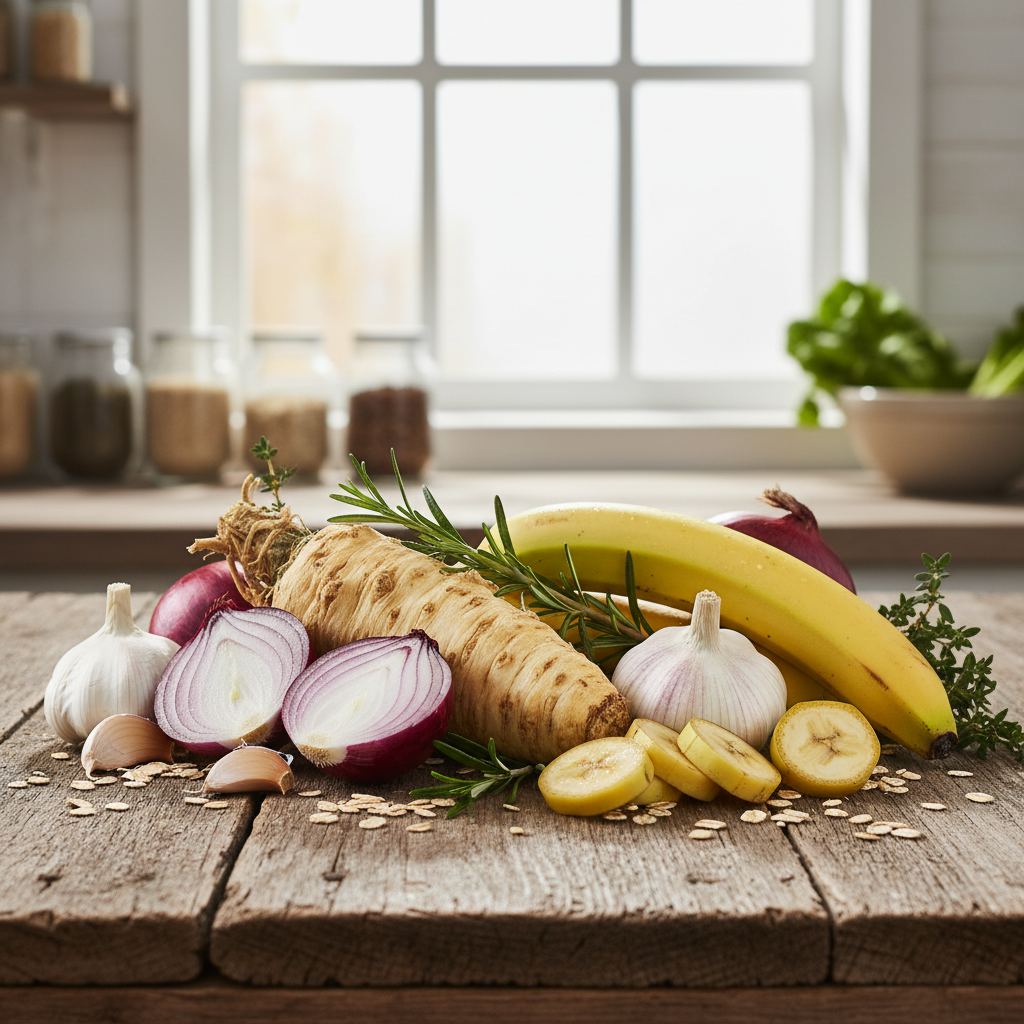
Navigating the world of gut health can be complex, but prebiotics offer a straightforward path to supporting your digestive system. For 2026, the best prebiotics are those backed by solid scientific evidence, demonstrating their ability to selectively nourish beneficial gut bacteria and contribute to a balanced microbiome. This article will guide you through the leading prebiotic options, explaining their mechanisms, ideal dosages, and how to effectively integrate them into your daily routine to enhance your overall well-being.
What Are Prebiotics and Why Do They Matter?
Prebiotics are specialized plant fibers that act as food for the beneficial bacteria residing in your gut, primarily Bifidobacteria and Lactobacilli. Unlike other dietary fibers, prebiotics are not digested by human enzymes in the upper gastrointestinal tract. Instead, they pass through to the large intestine where they are fermented by gut microbes. This fermentation process produces short-chain fatty acids (SCFAs) like butyrate, acetate, and propionate, which are vital for gut health, providing energy to colon cells, supporting gut barrier integrity, and influencing immune function.
The distinction between prebiotics and probiotics is crucial. Probiotics are live microorganisms that confer a health benefit when consumed in adequate amounts, essentially introducing beneficial bacteria. Prebiotics, on the other hand, are the fuel that helps these existing or introduced beneficial bacteria thrive. A healthy, diverse gut microbiome, fostered by adequate prebiotic intake, is associated with improved digestion, enhanced nutrient absorption, modulated immune responses, and even potential impacts on mood and cognitive function.
Our Methodology for Selecting the Best Prebiotics 2026
When identifying the best prebiotics for 2026, our selection process is rigorous and evidence-led. We prioritize several key criteria to ensure that our recommendations are both effective and safe:
- Scientific Evidence: We look for prebiotics with robust human clinical trials demonstrating their efficacy in promoting beneficial gut bacteria and improving specific health outcomes. Preliminary evidence or animal studies are noted as such.
- Specificity: True prebiotics should selectively stimulate the growth and activity of beneficial bacteria, rather than feeding all gut microbes indiscriminately.
- Dosage and Efficacy: We consider the typical effective dosages identified in research and the consistency of results across studies.
- Safety Profile: The prebiotic must have a well-established safety record with minimal side effects at recommended doses.
- Purity and Quality: For supplements, we prioritize products that are third-party tested for purity, potency, and absence of contaminants.
- Accessibility and Form: We consider the availability of the prebiotic in both dietary sources and supplement forms, as well as different supplement formats (powder, capsule).
By adhering to these standards, we aim to provide recommendations that are reliable and actionable for those seeking to optimize their gut health.
Top Prebiotic Picks for 2026
Based on current research and efficacy, here are some of the leading prebiotic fibers to consider:
Inulin
Inulin is a naturally occurring fructan found in many plants, especially chicory root, Jerusalem artichokes, and agave. It's one of the most well-researched prebiotics. Inulin is a soluble dietary fiber that passes undigested to the colon, where it is fermented primarily by Bifidobacteria. This fermentation leads to the production of SCFAs, particularly butyrate, which is crucial for colon health.
- Mechanism: Fermented by beneficial bacteria, increasing their numbers and producing SCFAs.
- Benefits: Supports regularity, may improve mineral absorption (calcium, magnesium), and contributes to a healthy gut microbiome.
- Typical Dose: Often starts at 2-5 grams per day, gradually increasing to 10-20 grams per day, depending on tolerance.
- Safety: Generally safe, but high doses can cause gas, bloating, and abdominal discomfort, especially when first introduced.
- Who it Suits: Individuals looking for general gut health support, improved regularity, and increased beneficial bacteria.
Fructooligosaccharides (FOS)
FOS are shorter chains of fructose molecules compared to inulin, but they share similar properties and are often found together in nature. They are present in foods like onions, garlic, asparagus, and bananas. Like inulin, FOS are selectively fermented by beneficial gut bacteria, particularly Bifidobacteria.
- Mechanism: Selective fermentation by Bifidobacteria, leading to increased beneficial bacteria and SCFA production.
- Benefits: Similar to inulin, FOS supports digestive health, may enhance mineral absorption, and contributes to a balanced microbiome.
- Typical Dose: Commonly used in doses ranging from 2-10 grams per day.
- Safety: Well-tolerated at moderate doses; higher doses may lead to gastrointestinal discomfort.
- Who it Suits: Those seeking a gentler introduction to prebiotics or who find longer-chain inulin too potent.
Galactooligosaccharides (GOS)
GOS are a type of prebiotic derived from lactose, though they are suitable for most individuals with lactose intolerance as the lactose content is minimal. GOS are particularly effective at promoting the growth of Bifidobacteria and are often found in infant formulas due to their role in developing a healthy infant gut microbiome.
- Mechanism: Highly effective at stimulating the growth of Bifidobacteria in the colon.
- Benefits: Strong bifidogenic effect, studied for potential benefits in individuals with irritable bowel syndrome (IBS), and immune modulation.
- Typical Dose: Research often uses doses between 2-6 grams per day.
- Safety: Generally well-tolerated, with fewer reported side effects at lower doses compared to some other prebiotics.
- Who it Suits: Individuals looking to specifically boost Bifidobacteria, those with sensitive digestive systems, or those exploring options for IBS support (under clinical guidance).
Partially Hydrolyzed Guar Gum (PHGG)
PHGG is a soluble dietary fiber derived from the guar bean. It is known for its excellent solubility and lower propensity for causing gas and bloating compared to some other fibers, making it a good choice for sensitive individuals. PHGG ferments slowly in the gut, providing a sustained food source for beneficial bacteria.
- Mechanism: Slow, gentle fermentation by gut bacteria, promoting a healthy microbiome without rapid gas production.
- Benefits: Supports bowel regularity (both constipation and diarrhea), helps manage symptoms of IBS, and promotes satiety.
- Typical Dose: Often 5-10 grams per day, can be increased gradually.
- Safety: Very well-tolerated, considered one of the gentlest prebiotics.
- Who it Suits: Individuals with IBS, those prone to digestive discomfort from other fibers, or anyone seeking gentle regularity support.
Resistant Starch
Resistant starch is a type of starch that is not digested in the small intestine but instead passes to the large intestine, where it acts as a prebiotic. There are several types (RS1-RS4), found in foods like green bananas, raw oats, cooked and cooled potatoes/rice, and legumes.
- Mechanism: Fermented by a wide range of gut bacteria, leading to significant SCFA production, especially butyrate.
- Benefits: Strong butyrate production, supports gut barrier function, may improve insulin sensitivity, and promotes satiety.
- Typical Dose: Varies widely depending on the source; often 10-30 grams per day from food or supplements.
- Safety: Generally safe, but high doses can cause gas and bloating.
- Who it Suits: Individuals looking for diverse microbial support and strong SCFA production, especially butyrate.
Integrating Prebiotics into Your Diet and Supplement Routine
Incorporating prebiotics can be done through both diet and supplementation. Many common foods are rich in prebiotics, offering a natural and delicious way to feed your gut bacteria:
- Vegetables: Garlic, onions, leeks, asparagus, chicory root, dandelion greens, artichokes.
- Fruits: Bananas (especially slightly green), apples, berries.
- Grains: Oats, barley.
- Legumes: Lentils, chickpeas, beans.
When using supplements, consider starting with a single type of prebiotic to assess your tolerance. You can mix prebiotic powders into water, smoothies, yogurt, or oatmeal. It's often beneficial to take prebiotics consistently, perhaps with a meal, to support a stable gut environment. Combining prebiotics with a diverse diet rich in whole foods and adequate hydration will yield the best results for your gut health.
Potential Side Effects and How to Minimize Them
While prebiotics are generally safe and beneficial, they can sometimes cause mild gastrointestinal side effects, especially when first introduced or taken in high doses. These include:
- Gas and Bloating: As gut bacteria ferment prebiotics, they produce gas. This is a normal process but can be uncomfortable.
- Abdominal Cramping: Some individuals may experience mild cramps.
- Changes in Bowel Habits: This can include either increased frequency or, less commonly, temporary constipation.
To minimize these side effects, follow the