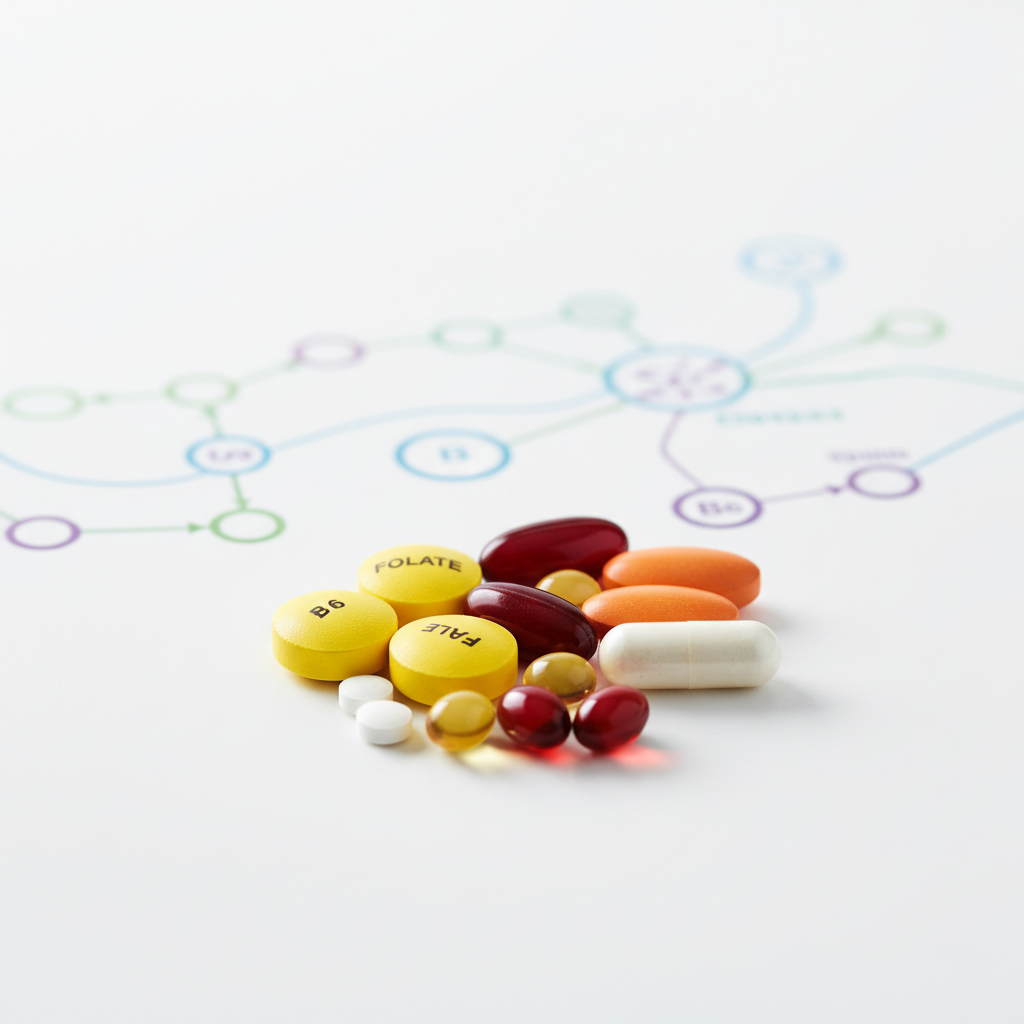
Homocysteine supplements are primarily utilized to address elevated levels of homocysteine, an amino acid naturally produced in the body. While homocysteine is a normal intermediate in methionine metabolism, high concentrations are associated with an increased risk of various health issues, particularly those affecting the cardiovascular system and cognitive function. The most common and effective supplements for managing homocysteine levels are specific B vitamins, namely folate, vitamin B12, and vitamin B6, which play crucial roles in its metabolic breakdown.
What is Homocysteine and Why Does it Matter?
Homocysteine is a sulfur-containing amino acid that is an intermediate product in the metabolism of methionine, an essential amino acid obtained from protein-rich foods. Under normal circumstances, homocysteine is quickly converted into other beneficial compounds through two main pathways: remethylation or transsulfuration. Remethylation converts homocysteine back to methionine, a process that requires folate (specifically 5-methyltetrahydrofolate) and vitamin B12. Transsulfuration converts homocysteine into cysteine, an amino acid used to synthesize glutathione, a powerful antioxidant, and this pathway requires vitamin B6.
When these metabolic pathways are impaired, often due to deficiencies in the necessary B vitamins or genetic factors (such as mutations in the MTHFR gene), homocysteine can accumulate in the bloodstream. Elevated homocysteine levels, known as hyperhomocysteinemia, are considered an independent risk factor for various health conditions. Research has linked high homocysteine to an increased risk of cardiovascular diseases, including atherosclerosis, heart attack, and stroke, as well as venous thrombosis. Furthermore, elevated homocysteine has been implicated in cognitive impairment, dementia, and certain neurodegenerative disorders. Maintaining optimal homocysteine levels is therefore a key aspect of preventive health strategies.
Key Nutrients for Homocysteine Metabolism
The metabolism of homocysteine is intricately linked to the availability and function of three essential B vitamins:
- Folate (Vitamin B9): Folate is perhaps the most critical nutrient for homocysteine metabolism. Its active form, 5-methyltetrahydrofolate (5-MTHF), acts as a methyl donor in the remethylation pathway, converting homocysteine back to methionine. Many individuals have a genetic variation (MTHFR polymorphism) that reduces their ability to convert synthetic folic acid into its active form, making supplementation with L-methylfolate a more direct and often more effective option for these individuals. You can learn more about folate and its various forms.
- Vitamin B12 (Cobalamin): Vitamin B12 works in conjunction with folate in the remethylation pathway. It is a co-factor for the enzyme methionine synthase, which catalyzes the conversion of homocysteine to methionine using the methyl group donated by 5-MTHF. Deficiencies in B12 can lead to a 'methyl trap,' where folate is trapped in its 5-MTHF form and cannot be utilized, leading to functional folate deficiency and elevated homocysteine. Methylcobalamin is often preferred over cyanocobalamin due to its direct bioavailability. For more information on vitamin B12, explore our ingredient guide.
- Vitamin B6 (Pyridoxine): Vitamin B6, in its active form pyridoxal-5-phosphate (P5P), is essential for the transsulfuration pathway. It acts as a co-factor for two enzymes, cystathionine beta-synthase and cystathionine gamma-lyase, which convert homocysteine into cysteine. This pathway is crucial for detoxifying homocysteine and producing cysteine, which is then used to synthesize glutathione.
These three vitamins often work synergistically, and a deficiency in any one of them can disrupt homocysteine metabolism and lead to elevated levels.
Evidence for Homocysteine-Lowering Supplements
Numerous studies have consistently shown that supplementation with folate, vitamin B12, and vitamin B6 can effectively lower elevated homocysteine levels. Meta-analyses of randomized controlled trials have demonstrated that these B vitamins, individually or in combination, can significantly reduce plasma homocysteine concentrations in various populations.
However, the crucial question is whether lowering homocysteine through supplementation translates into a reduced risk of cardiovascular events or improved cognitive function. The evidence here is more nuanced:
- Cardiovascular Disease: While B vitamin supplementation effectively lowers homocysteine, large-scale clinical trials (e.g., the HOPE-2 trial, the VITATOPS trial) have generally not shown a significant reduction in major cardiovascular events (heart attack, stroke, cardiovascular death) in individuals with pre-existing cardiovascular disease or at high risk. Some studies have suggested a modest benefit in specific subgroups, such as those with low baseline folate levels or kidney disease. The prevailing view is that while homocysteine is a risk marker, lowering it with B vitamins may not directly alter the course of established cardiovascular disease in all cases.
- Stroke: Some evidence, particularly from meta-analyses, suggests that B vitamin supplementation might reduce the risk of stroke, especially in populations with lower baseline folate levels or those not receiving folic acid fortification.
- Cognitive Function and Dementia: Research into the effects of homocysteine-lowering supplements on cognitive decline and dementia is ongoing. Some studies have shown that B vitamin supplementation can slow the rate of brain atrophy and cognitive decline in individuals with mild cognitive impairment and elevated homocysteine. However, other studies have not found a significant benefit in preventing dementia in the general population. Evidence is preliminary, and more robust human evidence is needed to draw definitive conclusions.
It's important to differentiate between the ability of these supplements to lower homocysteine (which is well-established) and their ability to prevent disease outcomes (which is less consistently proven across all populations and conditions).
Dosing and Forms of Homocysteine-Related Supplements
The typical dosages for homocysteine-lowering supplements vary depending on individual needs, baseline homocysteine levels, and specific health goals. It is always best to consult a healthcare professional for personalized recommendations.
- Folate: Doses typically range from 400 mcg to 5 mg daily. For individuals with MTHFR gene variations, the active form L-methylfolate (or 5-MTHF) is often recommended, as it bypasses the need for enzymatic conversion.
- Vitamin B12: Doses can range from 500 mcg to 1 mg (or more) daily, especially for those with deficiencies or malabsorption issues. Methylcobalamin is generally preferred over cyanocobalamin for its direct bioavailability and active form.
- Vitamin B6: Doses commonly range from 10 mg to 50 mg daily. The active form, pyridoxal-5-phosphate (P5P), is often used for better absorption and utilization.
Many homocysteine-specific supplements are available as combination products, providing all three key B vitamins in appropriate ratios. These formulations are designed to support the complete homocysteine metabolic pathway.
Safety, Side Effects, and Interactions
Homocysteine-lowering B vitamins are generally considered safe when taken at recommended dosages. However, some considerations and potential interactions exist:
- Folate: High doses of folic acid (the synthetic form) can mask a vitamin B12 deficiency, potentially leading to irreversible neurological damage if the B12 deficiency goes undiagnosed and untreated. This risk is lower with L-methylfolate.
- Vitamin B12: Vitamin B12 is water-soluble and generally very safe, even at high doses, as excess is typically excreted.
- Vitamin B6: While generally safe, very high doses of vitamin B6 (e.g., above 100-200 mg/day over extended periods) can lead to peripheral neuropathy, characterized by numbness and tingling in the extremities. This is rare at typical supplemental doses.
- Medication Interactions: Folate can interact with certain medications, such as methotrexate (a chemotherapy drug), some anti-epileptic drugs, and sulfasalazine. Vitamin B6 can interact with certain medications for Parkinson's disease (levodopa) and some anti-tuberculosis drugs. Always inform your doctor about all supplements you are taking.
- Allergic Reactions: Although rare, allergic reactions to B vitamins are possible.
It is crucial to discuss any existing medical conditions or medications with a healthcare provider before starting homocysteine supplements.
Who Should Consider Homocysteine Supplements?
Individuals who might consider homocysteine supplements include:
- Those with Elevated Homocysteine Levels: The most direct indication for these supplements is a blood test revealing hyperhomocysteinemia.
- Individuals with B Vitamin Deficiencies: People with confirmed deficiencies in folate, vitamin B12, or vitamin B6, often due to dietary restrictions (e.g., vegans for B12), malabsorption issues (e.g., pernicious anemia, Crohn's disease), or certain medications.
- Genetic Predispositions: Individuals with MTHFR gene variations that impair folate metabolism may benefit from L-methylfolate.
- Certain Risk Factors: People with a family history of cardiovascular disease or those with other risk factors, under medical guidance, might explore these supplements.
It's important to emphasize that homocysteine levels should be assessed by a healthcare professional, who can also help identify any underlying causes of elevation and recommend an appropriate course of action.
When to Consult a Clinician
Consulting a clinician is essential before starting any homocysteine supplement regimen. This is particularly important if you:
- Have persistently elevated homocysteine levels.
- Have a history of cardiovascular disease, stroke, or cognitive issues.
- Are pregnant or breastfeeding.
- Have any chronic health conditions, such as kidney disease or diabetes.
- Are taking any prescription medications, as interactions are possible.
- Experience any unusual symptoms after starting supplementation.
A healthcare provider can help determine if homocysteine supplementation is appropriate for your specific situation, recommend the correct dosages and forms, and monitor your progress to ensure safety and effectiveness. They can also rule out other potential causes of elevated homocysteine and ensure a comprehensive approach to your health.