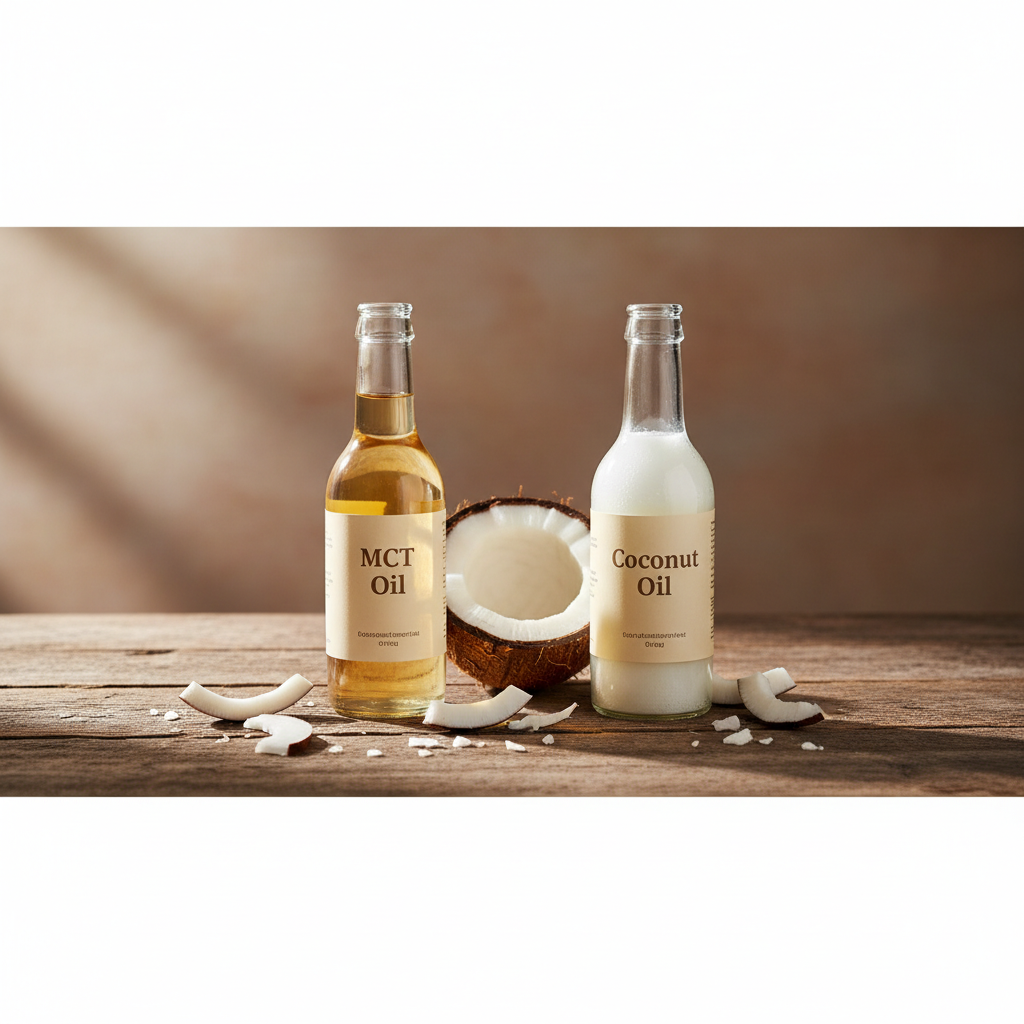
While often used interchangeably or confused, MCT oil and coconut oil are distinct products with different compositions, uses, and potential benefits. Coconut oil is a natural, whole food product rich in various fatty acids, including some medium-chain triglycerides (MCTs). In contrast, MCT oil is a refined supplement that concentrates specific types of MCTs, primarily caprylic acid (C8) and capric acid (C10), to deliver more targeted effects, particularly for energy and ketone production.
What Each Is and How It Works
Coconut Oil: A Natural Source with Broad Spectrum Fats
Coconut oil is an edible oil extracted from the kernel or meat of mature coconuts. It has been a dietary staple in many tropical regions for centuries and has gained popularity globally for its unique flavor and versatility. Nutritionally, coconut oil is composed of about 90% saturated fats, which is higher than butter or lard. However, a significant portion of these saturated fats are medium-chain triglycerides (MCTs).
The MCTs in coconut oil primarily include lauric acid (C12, typically 40-50%), myristic acid (C14), palmitic acid (C16), caprylic acid (C8, around 5-10%), and capric acid (C10, around 5-10%). While lauric acid is technically an MCT due to its chain length, its metabolic pathway is somewhat different from shorter-chain MCTs like C8 and C10. It is metabolized more slowly, akin to long-chain fatty acids (LCTs), and is less efficiently converted into ketones compared to C8 and C10.
Beyond its fatty acid profile, coconut oil also contains small amounts of vitamins, minerals, and polyphenols, especially virgin coconut oil. It is commonly used in cooking, baking, and as a topical application for skin and hair health. Its mechanism of action in the body is broad, contributing to general dietary fat intake, providing energy, and potentially offering some antimicrobial properties due to its lauric acid content.
MCT Oil: A Concentrated Supplement for Targeted Effects
MCT oil is a dietary supplement consisting almost entirely of medium-chain triglycerides. Unlike coconut oil, which contains a mix of fatty acids, MCT oil is specifically processed to isolate and concentrate C8 (caprylic acid) and C10 (capric acid), sometimes with a small amount of C6 (caproic acid). The goal of MCT oil is to provide a highly efficient source of energy that is rapidly absorbed and metabolized.
The primary mechanism of MCT oil lies in the unique way C8 and C10 are processed by the body. Unlike most dietary fats (long-chain triglycerides or LCTs), which require bile salts and pancreatic enzymes for digestion and are then transported via the lymphatic system, MCTs can be absorbed directly from the gut into the bloodstream. They travel straight to the liver, where they are quickly converted into energy or ketone bodies. This rapid conversion makes MCT oil a popular choice for individuals on ketogenic diets, as ketones can serve as an alternative fuel source for the brain and muscles, especially during periods of carbohydrate restriction.
The rapid absorption and metabolism of MCTs bypass several digestive steps, making them a readily available energy source. This efficiency is why MCT oil is often favored by athletes seeking quick energy or by those looking to support cognitive function through ketone production.
The Key Differences in Fatty Acid Profile
The most crucial distinction between MCT oil and coconut oil lies in their fatty acid composition. This difference dictates their metabolic pathways, potential benefits, and how they are best utilized.
- Coconut Oil: Contains a diverse range of fatty acids. While approximately 60-70% of its fatty acids are MCTs, the predominant MCT is lauric acid (C12), which makes up about 40-50% of the total. It also contains significant amounts of long-chain triglycerides (LCTs) like palmitic acid (C16) and oleic acid (C18). Lauric acid, despite being an MCT, is metabolized more slowly than C8 and C10. It takes a longer route through the liver and is less efficiently converted into ketones.
- MCT Oil: Is specifically formulated to contain higher concentrations of caprylic acid (C8) and capric acid (C10). A high-quality MCT oil will often be 95% or more C8 and C10 combined, with C8 being particularly prized for its rapid conversion to ketones. Some MCT oils may also contain a small percentage of C6 (caproic acid), which is even more rapidly metabolized but can cause digestive upset in larger quantities. The absence of significant amounts of C12 and LCTs is what gives MCT oil its unique metabolic advantages.
This concentrated profile of C8 and C10 in MCT oil means that a smaller dose can yield a more potent effect in terms of ketone production and rapid energy compared to an equivalent amount of coconut oil. For a deeper dive into specific fatty acids, you can explore resources on MCT oil and its components.
Evidence by Outcome: What the Research Says
Energy and Metabolism
MCT Oil: Research consistently shows that MCTs, particularly C8 and C10, are rapidly absorbed and converted into ketones, providing a quick and efficient energy source. This makes MCT oil a popular supplement for individuals following ketogenic diets, as it can help raise ketone levels and support metabolic ketosis. Some studies suggest MCT oil may enhance exercise performance by providing an alternative fuel source during prolonged activity, though evidence is preliminary and mixed across different types of exercise.
Coconut Oil: While coconut oil does provide energy, its slower metabolism due to the higher lauric acid content means it doesn't offer the same rapid ketone boost as concentrated MCT oil. It contributes to overall dietary fat intake and can be a source of sustained energy, but its impact on acute metabolic states like ketosis is less pronounced.
Weight Management
MCT Oil: Several studies have investigated MCT oil's role in weight management. It has been been suggested to promote satiety, potentially leading to reduced calorie intake. Some research indicates that MCTs may slightly increase thermogenesis (calorie burning) and fat oxidation. However, the effects are generally modest, and MCT oil should not be seen as a magic bullet for weight loss but rather as a potential aid within a broader healthy lifestyle.
Coconut Oil: The evidence for coconut oil's direct impact on weight loss is less robust. While some proponents point to its MCT content, the lower concentration and different metabolic pathway of lauric acid mean its effects are not as pronounced as those seen with C8/C10 rich MCT oil. It's a calorie-dense food, and excessive consumption could contribute to weight gain.
Brain Health and Cognitive Function
MCT Oil: Due to its ability to rapidly produce ketones, MCT oil is of significant interest in the context of brain health. Ketones can cross the blood-brain barrier and serve as an alternative fuel source for brain cells, which may be beneficial in conditions where glucose metabolism is impaired. Preliminary research and small trials suggest potential cognitive benefits, particularly in older adults or those with mild cognitive impairment, but more robust human evidence is needed.
Coconut Oil: While coconut oil contains MCTs, its less efficient ketone production means it's less directly studied for acute cognitive enhancement. However, as part of a balanced diet, the fats in coconut oil contribute to overall brain health.
Gut Health and Antimicrobial Properties
MCT Oil: Some MCTs, particularly C8 and C10, have been studied for their potential antimicrobial properties, which could theoretically influence gut microbiota. However, direct evidence for significant gut health benefits from MCT oil supplementation in healthy individuals is still emerging.
Coconut Oil: Lauric acid (C12), abundant in coconut oil, is known for its antimicrobial and antiviral properties. This is often cited as a reason for coconut oil's traditional use in various health remedies. While these properties are well-documented in vitro, their direct impact on human gut health when consumed orally requires more research.
Bioavailability, Dosing, and Forms
MCT Oil: Rapid Absorption and Specific Dosing
MCT oil is typically available as a liquid or in powder form. The liquid form is most common and is known for its rapid absorption. Due to its concentrated nature, it's crucial to start with a low dose to avoid digestive upset. A common starting dose is 1 teaspoon (5 ml) per day, gradually increasing to 1-2 tablespoons (15-30 ml) per day, spread throughout meals, as tolerated. It can be mixed into coffee, smoothies, salad dressings, or taken directly. Some individuals may experience gastrointestinal discomfort, such as nausea, diarrhea, or stomach cramps, especially when starting with too high a dose or taking it on an empty stomach. The bioavailability of C8 and C10 in MCT oil is very high due to their direct portal vein absorption.
Coconut Oil: Slower Absorption and Versatile Use
Coconut oil is typically sold as a solid at room temperature and melts into a liquid above 76°F (24°C). Its absorption is slower than pure MCT oil because of its higher content of lauric acid and LCTs, which require more extensive digestion. There isn't a specific "supplemental" dose for coconut oil; it's generally consumed as a dietary fat, often used in cooking, baking, or as a spread. Typical culinary uses involve 1-2 tablespoons per serving. Virgin coconut oil retains more of its natural aroma and flavor and is often preferred for raw consumption or low-heat cooking, while refined coconut oil has a neutral flavor and higher smoke point, making it suitable for higher-heat cooking. For more information on different types of oils, consider exploring articles on healthy cooking oils.
Safety, Side Effects, and Interactions
MCT Oil Safety and Side Effects
MCT oil is generally considered safe for most healthy adults when consumed in appropriate doses. The most common side effects are gastrointestinal issues, including diarrhea, stomach cramps, nausea, and bloating. These are usually dose-dependent and can be mitigated by starting with a small amount and gradually increasing it. In rare cases, very high doses of MCT oil might lead to an increase in liver enzymes or fat accumulation in the liver, particularly in individuals with pre-existing liver conditions. Individuals with diabetes should use MCT oil cautiously, as it can raise ketone levels, which might be problematic in uncontrolled diabetes (ketoacidosis risk, though rare with dietary MCTs).
Coconut Oil Safety and Side Effects
Coconut oil is also generally safe for consumption as a food ingredient. Its main nutritional concern is its high saturated fat content. While the impact of dietary saturated fat on cardiovascular health is a complex and evolving area of research, excessive intake of saturated fats from any source can potentially raise LDL ("bad") cholesterol levels in some individuals. Side effects are rare but can include allergic reactions in sensitive individuals. As a food, it's less likely to cause acute digestive upset compared to concentrated MCT oil, unless consumed in very large quantities.
Potential Interactions
MCT Oil: There is limited evidence of significant drug interactions with MCT oil. However, individuals on medications for diabetes or those with liver conditions should consult their healthcare provider before using MCT oil, as it can affect blood sugar and liver function. It may also interact with medications that affect fat absorption.
Coconut Oil: As a food, coconut oil is generally not associated with significant drug interactions. However, individuals on blood-thinning medications should be mindful of their overall dietary fat intake and discuss any significant dietary changes with their doctor.
Who Should Choose Which?
Opt for MCT Oil If You Are:
- Following a Ketogenic Diet: MCT oil is highly effective at boosting ketone production, which is central to ketosis.
- Seeking Rapid Energy: Athletes or individuals needing a quick, sustained energy source without a carbohydrate spike.
- Looking for Cognitive Support: To provide an alternative fuel source for the brain, especially in contexts of glucose metabolism challenges.
- Aiming for Specific Metabolic Effects: Such as increased satiety or a modest boost in fat oxidation (as part of a broader strategy).
Choose Coconut Oil If You Are:
- Looking for a Versatile Cooking Oil: Its flavor and higher smoke point (especially refined) make it excellent for various culinary applications.
- Seeking a Natural, Whole Food Fat Source: As part of a balanced diet, providing a mix of fatty acids.
- Interested in General Wellness: For its traditional uses and broader nutritional profile, including some antimicrobial properties.
- Using it Topically: For skin and hair moisturization, where its emollient properties are beneficial.
Ultimately, the choice between MCT oil and coconut oil depends on your specific health goals, dietary needs, and how you intend to use the product. They are not direct substitutes but rather complementary options within a healthy lifestyle.
Practical Buying Notes and Quality Considerations
Buying MCT Oil
- Source: Look for MCT oil derived from coconuts, as opposed to palm oil, due to environmental concerns associated with palm oil production.
- MCT Composition: Prioritize products that specify a high percentage of C8 (caprylic acid) and C10 (capric acid), as these are the most metabolically active MCTs. A common ratio is 60% C8 and 40% C10, or even higher C8 content (e.g., C8 only or 95% C8).
- Purity: Choose brands that are third-party tested for purity, heavy metals, and contaminants.
- Form: Liquid is most common, but powder forms are available for easier mixing into certain foods or for travel.
Buying Coconut Oil
- Type: Virgin coconut oil (VCO) is minimally processed, retaining more flavor, aroma, and antioxidants. It's best for raw consumption or low-heat cooking. Refined coconut oil (RCO) is processed to remove flavor and has a higher smoke point, making it suitable for high-heat cooking.
- Organic: Opt for organic to ensure the coconuts were grown without pesticides.
- Cold-Pressed: For virgin coconut oil, cold-pressed indicates minimal heat was used during extraction, preserving nutrient quality.
- Packaging: Glass jars are often preferred to avoid potential leaching from plastics, especially for oils.
Always read labels carefully and choose products from reputable manufacturers to ensure quality and efficacy.