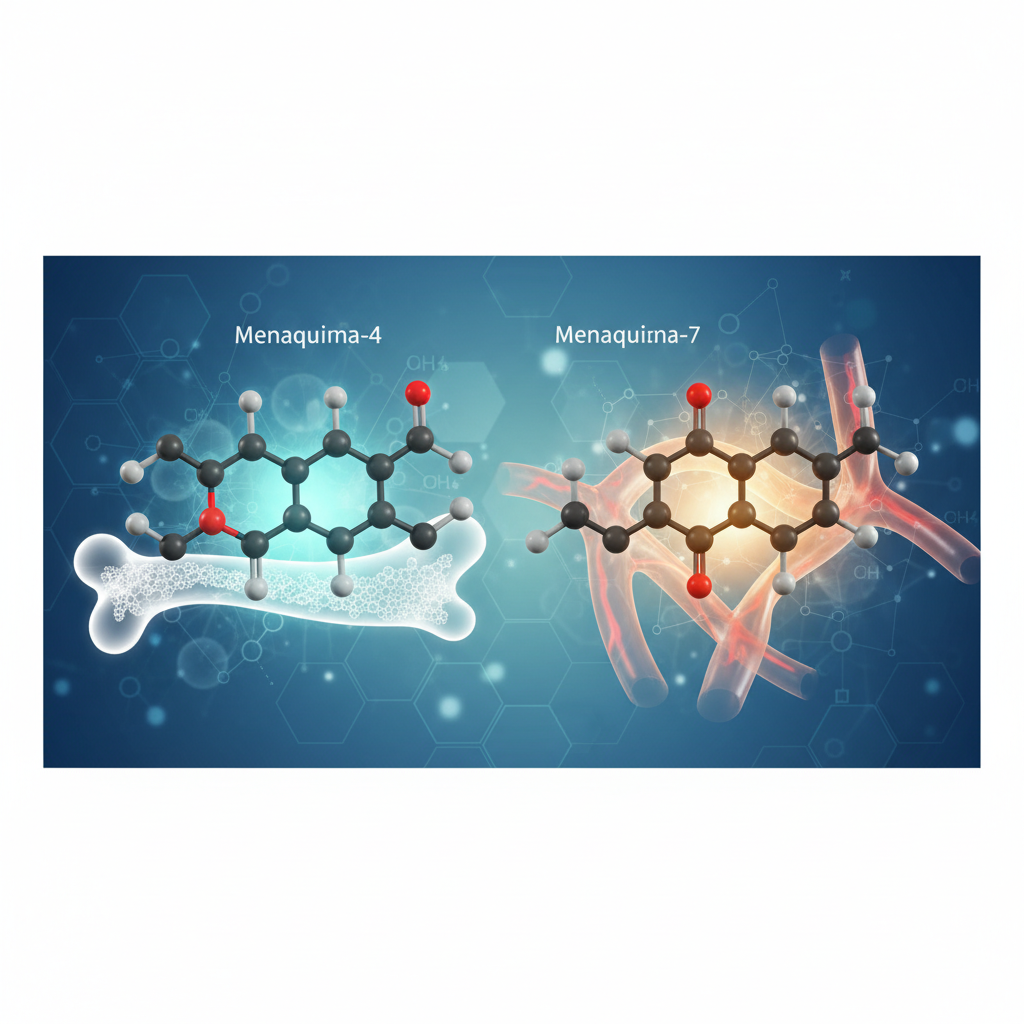
Vitamin K2 is a fat-soluble vitamin crucial for bone health and cardiovascular well-being, primarily by activating specific proteins that regulate calcium. When comparing MK4 vs MK7, it's important to understand that these are two distinct forms of vitamin K2, each with unique characteristics regarding their chemical structure, dietary sources, bioavailability, and physiological effects. While both contribute to overall vitamin K status, their differences mean they may be better suited for different health goals and individual needs.
What is Vitamin K2? Understanding MK4 and MK7
Vitamin K is a group of fat-soluble vitamins essential for blood clotting and bone metabolism. It exists in two main forms: Vitamin K1 (phylloquinone), found predominantly in leafy green vegetables, and Vitamin K2 (menaquinone), which encompasses several subtypes known as menaquinones (MK-n). The 'n' refers to the number of isoprene units in the side chain. Among these, MK4 and MK7 are the most studied and commercially available forms.
Menaquinone-4 (MK4) is a short-chain menaquinone. It is found in animal products like meat, eggs, and dairy, particularly from grass-fed animals. Interestingly, MK4 can also be synthesized endogenously in the body from K1, though the efficiency and physiological significance of this conversion are still debated. MK4 has a very short half-life in the bloodstream, meaning it is rapidly metabolized and cleared from the body. This rapid turnover suggests that to maintain consistent levels, higher and more frequent doses might be necessary.
Menaquinone-7 (MK7) is a long-chain menaquinone. It is primarily found in fermented foods, with natto (a traditional Japanese fermented soybean dish) being an exceptionally rich source. Unlike MK4, MK7 has a much longer half-life, allowing it to remain in the bloodstream for days after ingestion. This extended presence enables better systemic distribution throughout the body, reaching various tissues and organs more effectively.
Both MK4 and MK7 function by activating vitamin K-dependent proteins (VKDPs). These proteins require vitamin K as a co-factor for a process called carboxylation, which enables them to bind calcium. Key VKDPs include osteocalcin, which helps integrate calcium into the bone matrix, and matrix Gla protein (MGP), which prevents calcium from depositing in soft tissues like arteries.
Evidence by Outcome: Bone Health, Cardiovascular Health, and Beyond
The research on MK4 and MK7, while both pointing to benefits in bone and cardiovascular health, often highlights different strengths and applications for each form.
Bone Health
MK4: In Japan, high-dose MK4 (typically 45 mg/day) is a pharmaceutical drug prescribed for osteoporosis. Clinical trials using these high doses have shown benefits in improving bone mineral density and reducing fracture risk in osteoporotic patients. However, these are pharmacological doses, significantly higher than typical dietary or supplemental intake. Research on lower, supplemental doses of MK4 for bone health is less consistent, with some studies showing modest benefits and others finding no significant effect.
MK7: Numerous studies support MK7's role in bone health at typical supplemental doses (e.g., 90-180 mcg/day). Its longer half-life allows for sustained activation of osteocalcin, leading to improved bone mineral density, bone strength, and reduced bone loss, particularly in postmenopausal women. MK7's superior systemic availability means it can more effectively reach bone tissue and exert its beneficial effects over time.
Cardiovascular Health
MK7: The evidence for MK7's cardiovascular benefits is particularly robust. By activating MGP, MK7 helps prevent the calcification of arteries, a major risk factor for heart disease. Studies have shown that MK7 supplementation can reduce arterial stiffness and even reverse arterial calcification in some populations. This protective effect on the vasculature is a significant reason many choose MK7 for general health maintenance.
MK4: While MK4 is essential for MGP activation, direct evidence for its efficacy in preventing or reversing arterial calcification at supplemental doses is less compelling than for MK7. Its rapid metabolism makes it challenging to maintain consistent levels necessary for sustained cardiovascular protection through typical supplementation.
Other Potential Benefits
Preliminary research suggests both MK4 and MK7 may have roles in other areas, including brain health, nerve health, and anti-inflammatory processes. However, the evidence in these areas is still emerging and not yet robust enough to draw definitive conclusions. For instance, some studies indicate MK4 might play a role in brain function, but more human trials are needed. Similarly, the anti-inflammatory properties are still under investigation.
Bioavailability, Dosage, and Absorption Differences
The distinct chemical structures of MK4 and MK7 lead to significant differences in how they are absorbed, metabolized, and utilized by the body.
MK4: As a short-chain menaquinone, MK4 is rapidly absorbed but also rapidly cleared from the bloodstream, with a half-life measured in hours. This means that to maintain consistent physiological levels, MK4 would theoretically need to be consumed frequently throughout the day, or in very high doses. Dietary sources provide relatively small amounts of MK4, and while the body can convert K1 to MK4, the efficiency of this process for systemic distribution is debated. Supplemental doses of MK4 often range from 1.5 mg to 45 mg, with the higher end typically used in pharmaceutical applications.
MK7: In contrast, MK7, with its longer side chain, has a significantly longer half-life, lasting for several days in the circulation. This allows for sustained blood levels and better distribution to extrahepatic tissues (tissues outside the liver), including bones and arteries. Its superior bioavailability means that lower, once-daily doses (typically 90-180 mcg) are sufficient to achieve and maintain beneficial effects. This makes MK7 a more practical choice for daily supplementation aimed at systemic benefits.
Both forms of vitamin K2 are fat-soluble, meaning they require dietary fat for optimal absorption. Therefore, it is generally recommended to take vitamin K2 supplements with a meal containing some fat to maximize their uptake by the body. For more information on the synergy between Vitamin K2 and D3, explore our article on Vitamin D3 and K2 synergy.
Safety Profile and Potential Interactions
Both MK4 and MK7 are generally considered safe for most individuals when taken at recommended doses. Vitamin K has a very low toxicity profile, and adverse effects are rare.
However, the most critical consideration for vitamin K supplementation, regardless of the form, is its interaction with anticoagulant medications, particularly warfarin (Coumadin). Warfarin works by inhibiting vitamin K recycling, thereby reducing the synthesis of clotting factors. Supplementing with any form of vitamin K can counteract warfarin's effects, potentially increasing the risk of blood clots. Individuals on warfarin or similar anticoagulant drugs must consult their healthcare provider before taking any vitamin K supplement. They may need to avoid K2 supplements or have their medication dosage carefully adjusted and monitored.
Other potential interactions include medications that can impair fat absorption, such as bile acid sequestrants (e.g., cholestyramine) and the weight-loss drug orlistat, which may reduce the absorption of fat-soluble vitamins like K2. Broad-spectrum antibiotics can also interfere with the gut bacteria that produce some forms of vitamin K, though this is less relevant for supplemental MK4 and MK7.
Side effects from K2 supplementation are uncommon and usually mild, such as mild stomach upset. If you experience any unusual symptoms, discontinue use and consult a healthcare professional.
Who Should Choose MK4, and Who Should Opt for MK7?
The choice between MK4 and MK7 often depends on individual health goals, dietary habits, and specific medical considerations.
You might consider MK4 if:
- You are specifically targeting bone health and are under medical supervision for conditions like osteoporosis, where higher, pharmaceutical doses of MK4 (as used in Japan) might be considered.
- You prefer a form that is naturally abundant in a wider range of animal-based foods, and you consume a diet rich in these sources.
- You are interested in the potential, though less established, localized effects of MK4 in specific tissues, given its rapid turnover.
You might opt for MK7 if:
- You are seeking broad, systemic support for both bone health and cardiovascular health. MK7's superior bioavailability and longer half-life make it more effective for these general health goals at typical supplemental doses.
- You want a convenient, once-daily supplement.
- You are looking to prevent arterial calcification and improve arterial elasticity, for which MK7 has stronger scientific backing.
- Your diet is low in fermented foods like natto, making supplementation a reliable way to ensure adequate intake of this long-chain menaquinone.
For most individuals looking to support their overall bone and cardiovascular health through daily supplementation, MK7 is generally the more practical and effective choice due to its superior bioavailability and sustained action. However, some individuals may choose to take a combination of both forms to potentially leverage the unique benefits of each.
Practical Considerations for Supplementation
When incorporating vitamin K2 into your regimen, whether MK4 or MK7, there are several practical points to keep in mind to maximize benefits and ensure safety.
- Quality and Purity: Always choose supplements from reputable brands that provide third-party testing for purity and potency. This ensures you are getting the stated amount of vitamin K2 and that the product is free from contaminants.
- Dosing: For MK7, typical daily doses range from 90 mcg to 180 mcg. For MK4, supplemental doses can vary widely, but for general health, they are often in the range of 1.5 mg to 5 mg. High-dose MK4 (45 mg) is typically a prescription in some countries. Always follow the manufacturer's recommendations or a healthcare professional's advice.
- Synergy with Vitamin D3: Vitamin K2 and Vitamin D3 work synergistically. Vitamin D3 helps with calcium absorption, while K2 directs that calcium to the bones and away from soft tissues. Many supplements combine both.
- Take with Fat: As a fat-soluble vitamin, K2 should be taken with a meal containing some dietary fat to enhance its absorption.
- Consult a Healthcare Professional: This is especially crucial if you are pregnant, nursing, have a pre-existing medical condition, or are taking any medications, particularly blood thinners. They can provide personalized advice and monitor for potential interactions. To learn more about various forms of Vitamin K and their roles, visit our ingredients section.