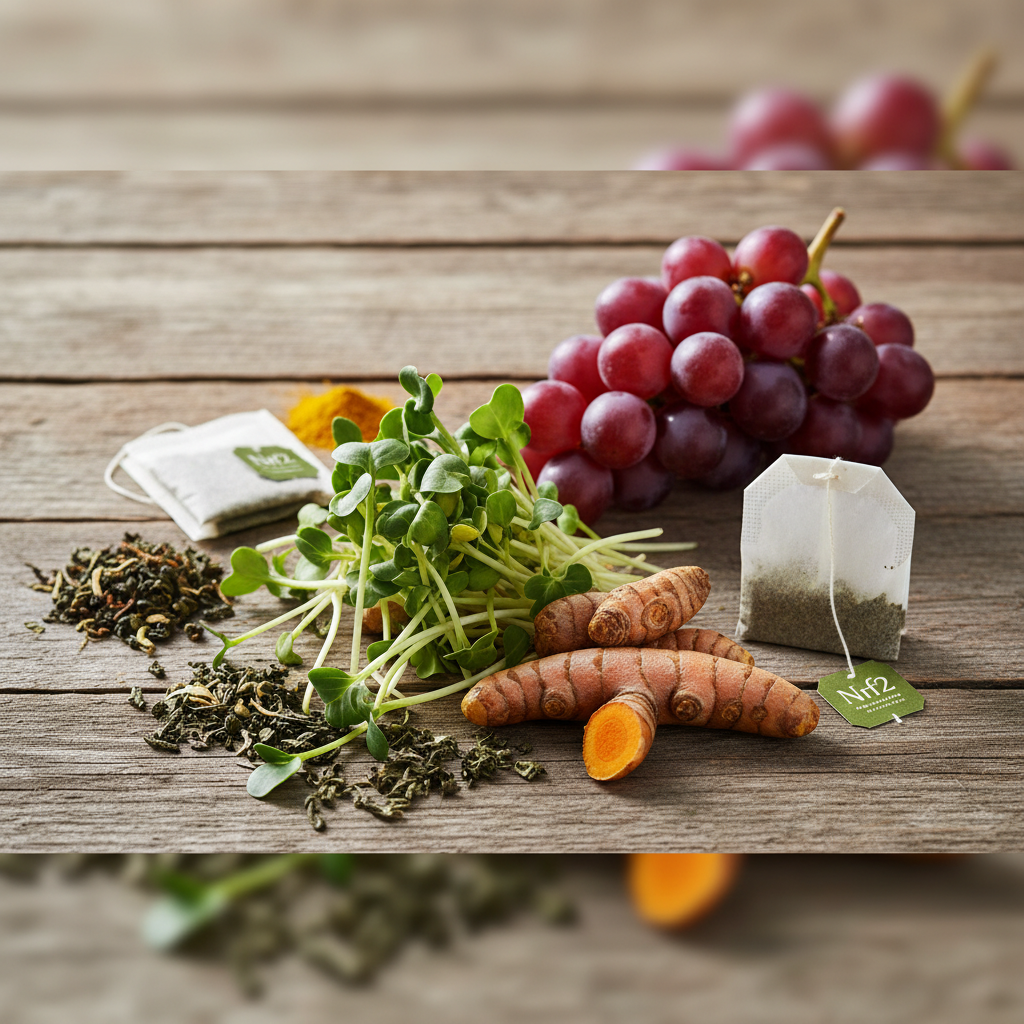
Nrf2 activators are a class of compounds that stimulate the Nuclear factor erythroid 2-related factor 2 (Nrf2) pathway, a critical cellular defense mechanism. This pathway acts as a master switch, upregulating the production of a wide array of antioxidant, detoxification, and anti-inflammatory proteins within the body. When activated, Nrf2 helps cells combat oxidative stress, reduce inflammation, and protect against cellular damage, making these activators a subject of intense scientific interest for their potential to support overall health and longevity. This article will rank the most prominent Nrf2 activators based on current scientific evidence, discussing their mechanisms, efficacy, and practical considerations for supplementation, helping you understand which might be best suited for your health goals.
Understanding Nrf2 and Its Role
The Nrf2 pathway is a fundamental regulator of cellular resilience, often referred to as the "master regulator of antioxidant response." In its inactive state, Nrf2 protein resides in the cytoplasm, bound to a protein called Keap1 (Kelch-like ECH-associated protein 1). Keap1 acts as a sensor for oxidative stress and electrophilic compounds. Under normal cellular conditions, Keap1 facilitates the ubiquitination and subsequent degradation of Nrf2, keeping its levels low. However, when cells encounter stressors such as oxidative damage, inflammation, or certain phytochemicals, Keap1 undergoes conformational changes. These changes prevent Keap1 from binding to Nrf2 and targeting it for degradation. Consequently, Nrf2 accumulates in the cytoplasm, translocates into the cell nucleus, and binds to specific DNA sequences known as Antioxidant Response Elements (AREs). This binding initiates the transcription of a vast array of protective genes. These genes encode for enzymes involved in glutathione synthesis, detoxification (e.g., glutathione S-transferases, NQO1), and antioxidant defense (e.g., heme oxygenase-1, superoxide dismutase). By orchestrating this comprehensive cellular defense program, Nrf2 plays a pivotal role in maintaining cellular homeostasis, protecting against damage from free radicals and toxins, and supporting healthy inflammatory responses. Its activation is increasingly recognized as a key strategy for promoting cellular health and potentially influencing healthy aging processes.
How Nrf2 Activators Work
Nrf2 activators are compounds that trigger the Nrf2 pathway, primarily by disrupting the interaction between Nrf2 and Keap1. Most Nrf2 activators achieve this by covalently modifying specific cysteine residues on the Keap1 protein. These modifications alter Keap1's structure, rendering it unable to bind to Nrf2 and mark it for degradation. This allows newly synthesized Nrf2 to escape degradation, accumulate in the cytoplasm, and then translocate to the nucleus. Once in the nucleus, Nrf2 partners with small Maf proteins to bind to AREs in the promoter regions of target genes. This binding initiates the transcription of genes responsible for producing a wide range of protective proteins. These proteins include phase II detoxification enzymes, such as glutathione S-transferases (GSTs) and UDP-glucuronosyltransferases (UGTs), which help neutralize and excrete harmful compounds. They also include antioxidant enzymes like heme oxygenase-1 (HO-1), thioredoxin reductase, and superoxide dismutase (SOD), which directly scavenge free radicals and reduce oxidative stress. Furthermore, Nrf2 activation can upregulate genes involved in glutathione synthesis, the body's master antioxidant. Some activators may also exert effects through other mechanisms that indirectly support Nrf2 activity or enhance its downstream effects, but the direct Keap1-Nrf2 interaction disruption is the most common and potent mode of action for many well-known Nrf2 activating compounds.
Top Nrf2 Activators Ranked by Evidence and Potency
When considering Nrf2 activators, it's important to evaluate them based on the strength of scientific evidence, particularly human clinical trials, and their perceived potency in activating the pathway. While direct comparisons are challenging due to varying study designs and bioavailability, certain compounds consistently demonstrate robust Nrf2 activating properties. Here, we rank some of the most prominent Nrf2 activators:
1. Sulforaphane (from Broccoli Sprouts)
Mechanism: Sulforaphane is widely regarded as one of the most potent natural Nrf2 activators. It works by directly and covalently modifying specific cysteine residues on the Keap1 protein, leading to the dissociation of Nrf2 and its subsequent nuclear translocation. This makes it a highly efficient inducer of antioxidant and detoxification enzymes.
Evidence: Extensive research, including human clinical trials, supports sulforaphane's ability to activate Nrf2, reduce oxidative stress, and support detoxification processes. Studies have shown its impact on various biomarkers of cellular protection.
Sources & Dosing: Found abundantly in broccoli sprouts, which contain glucoraphanin (a precursor) and myrosinase (an enzyme that converts glucoraphanin to sulforaphane). Supplements often provide standardized sulforaphane or glucoraphanin with active myrosinase. Typical doses aim for 10-30 mg of active sulforaphane per day.
2. Curcumin (from Turmeric)
Mechanism: Curcumin, the primary active compound in turmeric, is a well-studied Nrf2 activator. It also modifies Keap1 cysteine residues, albeit through a different binding site than sulforaphane, leading to Nrf2 stabilization and nuclear translocation. Curcumin also possesses potent anti-inflammatory properties through other pathways, offering broad cellular support.
Evidence: There is a vast body of research on curcumin's antioxidant and anti-inflammatory effects, with numerous studies demonstrating its Nrf2 activating capabilities in various cell and animal models, and a growing number of human trials. Its efficacy is often limited by poor bioavailability.
Sources & Dosing: Derived from the turmeric root. Standard curcumin extracts often have low absorption. Highly bioavailable forms (e.g., those formulated with piperine, liposomal delivery, or specific formulations like Meriva or BCM-95) are recommended. Doses typically range from 500-1500 mg per day of a high-bioavailability formulation.
3. Resveratrol
Mechanism: Resveratrol, a polyphenol found in red grapes and other plants, activates Nrf2 through multiple mechanisms, including the modification of Keap1 and potentially through sirtuin activation, which can indirectly influence Nrf2 signaling. It is also known for its antioxidant and anti-inflammatory properties.
Evidence: Research suggests resveratrol's ability to activate Nrf2 and enhance antioxidant defenses, particularly in preclinical models. Human studies are promising but often require higher doses or specific formulations to achieve significant systemic effects.
Sources & Dosing: Found in red grapes, red wine, and Japanese knotweed. Supplements typically provide trans-resveratrol. Doses can range from 100-500 mg per day.
4. Astaxanthin
Mechanism: Astaxanthin, a powerful carotenoid, is a potent antioxidant that also demonstrates Nrf2 activating properties. While its primary mechanism as an antioxidant involves direct free radical scavenging, it also appears to influence the Keap1-Nrf2 pathway, leading to increased expression of antioxidant enzymes.
Evidence: Emerging research, particularly in cellular and animal models, highlights astaxanthin's capacity to activate Nrf2. Human trials primarily focus on its antioxidant and anti-inflammatory benefits, with Nrf2 activation as a contributing factor.
Sources & Dosing: Sourced from microalgae (Haematococcus pluvialis) and found in seafood like salmon. Typical supplemental doses range from 4-12 mg per day.
5. Epigallocatechin Gallate (EGCG)
Mechanism: EGCG, the most abundant catechin in green tea, is another well-researched Nrf2 activator. It can modify Keap1, leading to Nrf2 stabilization and nuclear translocation. EGCG also possesses direct antioxidant activity and modulates various signaling pathways involved in inflammation and cellular protection.
Evidence: Numerous studies support EGCG's role in activating Nrf2 and enhancing antioxidant capacity. It is widely studied for its broad health benefits, with Nrf2 activation being a significant contributor.
Sources & Dosing: Abundant in green tea. Supplements provide concentrated EGCG. Doses typically range from 200-800 mg per day, often standardized to EGCG content.
Synergistic Nrf2 Activators and Stacking
The Nrf2 pathway is complex, and different activators may engage it through slightly different mechanisms or affect distinct downstream targets. This opens the possibility of synergistic effects when combining certain Nrf2 activators. For instance, combining sulforaphane with curcumin might offer a broader spectrum of cellular protection, as sulforaphane is a highly potent direct Keap1 modifier, while curcumin offers additional anti-inflammatory benefits through other pathways. Similarly, pairing a strong Nrf2 inducer with a direct antioxidant like astaxanthin could provide comprehensive support against oxidative stress.
However, "stacking" supplements should always be approached with caution. While some combinations might enhance benefits, others could potentially lead to redundant effects or, in rare cases, unforeseen interactions. It is crucial to understand the individual mechanisms of each compound and to start with lower doses when combining them. Consulting with a healthcare professional before combining multiple supplements is always recommended to ensure safety and appropriateness for your individual health profile. The goal is to achieve a balanced and comprehensive activation of cellular defense systems without overstimulating any single pathway or causing adverse effects.
Dosing and Bioavailability Considerations
Effective Nrf2 activation relies heavily on proper dosing and, critically, on the bioavailability of the chosen compound. Many potent natural Nrf2 activators, while powerful in vitro, face challenges in absorption and metabolism within the human body.
- Sulforaphane: For sulforaphane, the key is the conversion from its precursor, glucoraphanin, by the enzyme myrosinase. Consuming fresh broccoli sprouts provides both. Supplements often provide glucoraphanin with active myrosinase or stabilized sulforaphane. Doses typically aim for 10-30 mg of active sulforaphane.
- Curcumin: This is perhaps the most well-known example of a compound with poor bioavailability. Standard curcumin is poorly absorbed and rapidly metabolized. To overcome this, look for specialized formulations such as those containing piperine (which inhibits glucuronidation), liposomal curcumin, or specific patented formulations like Meriva (curcumin phytosome) or BCM-95. Effective doses of these enhanced forms can range from 500-1500 mg daily.
- Resveratrol: Like curcumin, resveratrol has limited bioavailability due to rapid metabolism. Micronized or liposomal forms may offer improved absorption. Doses typically range from 100-500 mg of trans-resveratrol.
- Astaxanthin: Being a fat-soluble compound, astaxanthin is best absorbed when taken with a meal containing dietary fats. Doses usually fall between 4-12 mg per day.
- EGCG: While generally better absorbed than curcumin or resveratrol, EGCG's bioavailability can vary. Taking it with food might improve absorption for some, though high doses on an empty stomach can sometimes cause mild stomach upset. Doses are typically 200-800 mg.
Consistency in supplementation is also vital. Nrf2 activation is an ongoing process, and regular intake of activators is necessary to maintain sustained upregulation of protective genes. Always follow manufacturer guidelines or consult a healthcare professional for personalized dosing advice.
Safety, Side Effects, and Interactions
Most natural Nrf2 activators are generally well-tolerated when taken at recommended doses. However, like any supplement, they can have potential side effects and interactions.
- Gastrointestinal Upset: Mild digestive issues such as stomach discomfort, gas, or diarrhea can occur, especially with higher doses or when taken on an empty stomach. This is more commonly reported with sulforaphane-rich products or high doses of EGCG.
- Blood Thinning: Curcumin and resveratrol, in particular, have mild antiplatelet effects and may theoretically increase the risk of bleeding, especially if combined with anticoagulant or antiplatelet medications (e.g., warfarin, aspirin). Individuals on such medications should exercise caution and consult their doctor.
- Liver Enzymes: While Nrf2 activation generally supports liver health, very high doses of certain compounds, particularly EGCG, have been linked to liver enzyme elevations in rare cases, especially in susceptible individuals.
- Drug Interactions: Nrf2 activators can influence drug-metabolizing enzymes (e.g., cytochrome P450 enzymes). This means they could potentially alter the metabolism and effectiveness of various prescription medications. For example, curcumin might interact with certain chemotherapy drugs, and sulforaphane could affect thyroid hormone medication. Always discuss your supplement regimen with your doctor or pharmacist, especially if you are taking any prescription medications.
- Contraindications: Pregnant or breastfeeding women, individuals with pre-existing medical conditions (e.g., gallstones for curcumin), or those undergoing surgery should typically avoid Nrf2 activators unless specifically advised by a healthcare provider. There is insufficient research to confirm safety in these populations.
Always prioritize transparency with your healthcare team about all supplements you are taking to ensure your safety and avoid potential adverse effects or interactions.
Who Should Consider Nrf2 Activators?
Nrf2 activators are primarily considered by individuals looking to proactively support their cellular health and enhance their body's natural defense mechanisms. They are not intended to treat, cure, or prevent any disease, but rather to support physiological processes.
- For General Wellness and Healthy Aging: Individuals interested in supporting their body's resilience against daily environmental stressors, promoting antioxidant defenses, and maintaining cellular health as they age may find Nrf2 activators beneficial.
- Exposure to Environmental Stressors: Those living in polluted environments, exposed to certain chemicals, or experiencing higher levels of oxidative stress due to lifestyle factors (e.g., intense exercise, occasional alcohol consumption) might consider Nrf2 activators to bolster their detoxification pathways.
- Supporting Healthy Inflammatory Responses: Given Nrf2's role in modulating inflammation, individuals seeking to support a balanced inflammatory response may find these compounds helpful.
- Complementary Health Strategies: Nrf2 activators can be integrated into a broader health strategy that includes a balanced diet, regular exercise, and stress management.
It is important to reiterate that Nrf2 activators are dietary supplements and should not replace conventional medical treatments or advice. Always consult with a healthcare professional to determine if Nrf2 activators are appropriate for your specific health needs and goals.
Choosing the Right Nrf2 Activator for You
Selecting the best Nrf2 activator depends on several factors, including your specific health goals, tolerance, budget, and preference for supplement forms.
- Consider Your Goals: If your primary goal is robust Nrf2 activation with strong scientific backing, sulforaphane (from broccoli sprouts or supplements) is often a top choice due to its direct and potent mechanism. If you're also looking for significant anti-inflammatory support, bioavailable curcumin might be a strong contender. For broader antioxidant support and healthy aging, resveratrol or astaxanthin could be appealing. EGCG offers a combination of Nrf2 activation and other green tea benefits.
- Bioavailability Matters: Always prioritize highly bioavailable forms, especially for curcumin and resveratrol, to ensure you are actually absorbing the active compounds. Check product labels for specific formulations (e.g., liposomal, phytosome, piperine-enhanced).
- Tolerance and Side Effects: Start with lower doses to assess your tolerance. While generally safe, some individuals may experience mild gastrointestinal discomfort.
- Interactions with Medications: This is a critical consideration. If you are on any prescription medications, particularly blood thinners or drugs metabolized by the liver, it is imperative to consult your doctor or pharmacist before starting any Nrf2 activator.
- Quality and Purity: Choose reputable brands that provide third-party testing for purity and potency. Look for clear labeling of active ingredients and their concentrations.
Ultimately, the "best" Nrf2 activator is the one that aligns with your individual needs, is well-tolerated, and can be safely integrated into your health regimen under the guidance of a healthcare professional. A balanced approach, combining a nutrient-rich diet with targeted supplementation, often yields the most comprehensive benefits for cellular health.