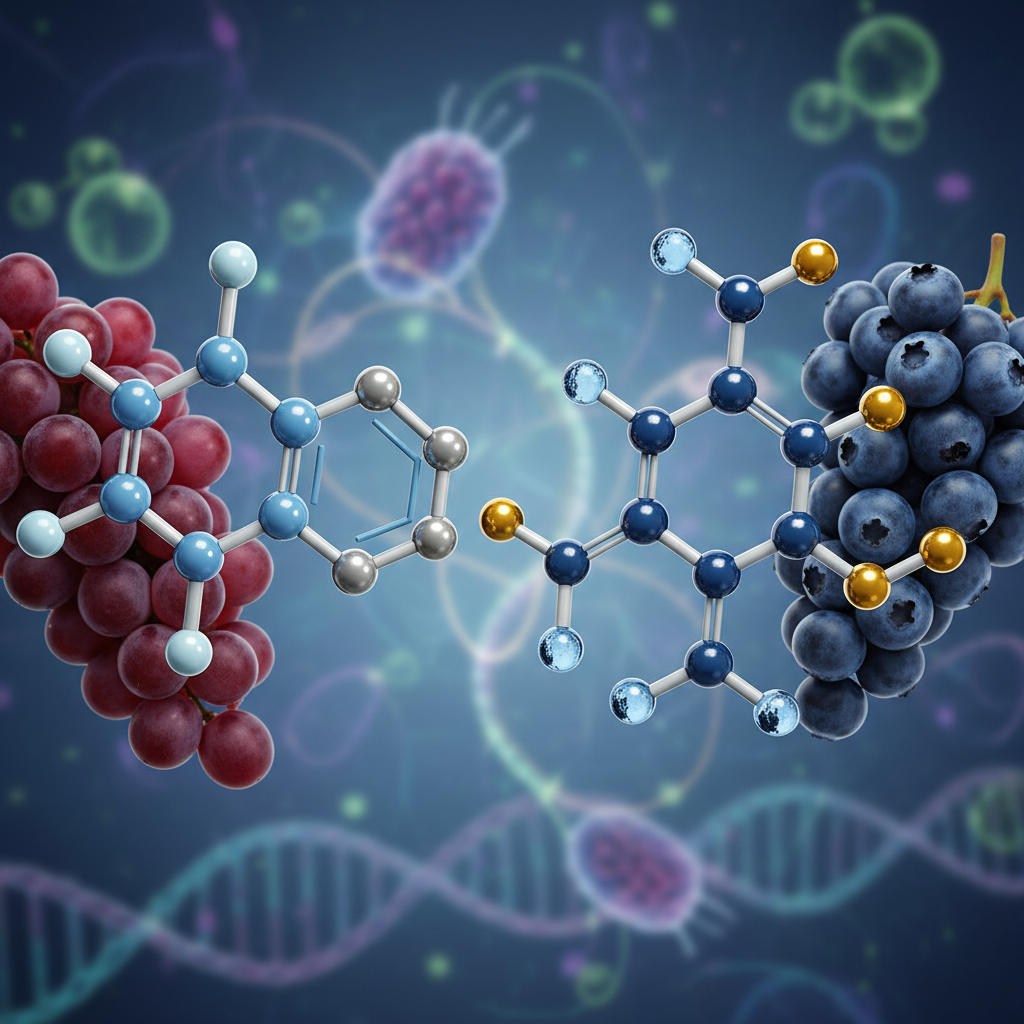
When exploring the world of dietary supplements, two polyphenols often emerge in discussions about antioxidant support and anti-aging: resveratrol and pterostilbene. While structurally similar, with pterostilbene being a methylated analog of resveratrol, they exhibit distinct differences in their absorption, metabolism, and potential biological effects. Understanding these nuances is key to determining which compound, or perhaps a combination, might best suit your individual health goals.
What Each Is and How It Works
Resveratrol is a natural polyphenol found in various plants, most notably in the skin of red grapes, blueberries, raspberries, and peanuts. It gained significant attention for its presence in red wine and the 'French paradox' – the observation of lower rates of heart disease in France despite a diet high in saturated fats. Resveratrol is primarily known for its antioxidant and anti-inflammatory properties. Its proposed mechanisms of action include activating sirtuins, particularly SIRT1, which are proteins involved in cellular health, metabolism, and longevity pathways. It also modulates various cellular signaling pathways, influencing gene expression related to inflammation, oxidative stress, and cell survival. For a deeper dive, you can explore our dedicated article on resveratrol.
Pterostilbene, on the other hand, is a stilbenoid compound structurally similar to resveratrol but with two methoxy groups replacing two hydroxyl groups on the molecule. It is naturally found in blueberries and the bark of the Pterocarpus marsupium tree. This slight structural modification is significant, as it makes pterostilbene more lipophilic (fat-soluble) and less susceptible to rapid metabolism in the body. Like resveratrol, pterostilbene is recognized for its antioxidant and anti-inflammatory capabilities and its ability to activate sirtuins. However, its enhanced stability and bioavailability are often cited as potential advantages, allowing it to exert its effects more efficiently and for a longer duration. Learn more about its specific properties in our pterostilbene ingredient guide.
Evidence by Outcome: A Head-to-Head Look
Antioxidant and Anti-inflammatory Effects
Both resveratrol and pterostilbene are potent antioxidants, capable of neutralizing free radicals and reducing oxidative stress, which is a major contributor to cellular aging and various chronic diseases. They also exhibit anti-inflammatory properties by modulating inflammatory pathways. Due to its methylated structure, pterostilbene is thought to be more stable in the body, potentially leading to a more sustained antioxidant and anti-inflammatory action compared to resveratrol. While both show promise, direct comparative human trials are still limited, with much of the evidence for pterostilbene coming from preclinical studies.
Cardiovascular Health
Resveratrol has a more extensive body of human research regarding cardiovascular health. Studies suggest it may support healthy blood pressure, improve endothelial function (the lining of blood vessels), and contribute to healthy cholesterol levels. It's also been investigated for its role in reducing platelet aggregation. Pterostilbene's research in this area is less mature, with most findings stemming from animal models indicating similar, and sometimes superior, benefits in reducing markers of cardiovascular risk. However, robust human clinical trials are needed to confirm these effects definitively.
Cognitive Function and Neuroprotection
This is an area where pterostilbene often shines in comparison. Its increased lipophilicity allows it to cross the blood-brain barrier more readily than resveratrol. Preclinical studies suggest that pterostilbene may offer enhanced neuroprotective benefits, potentially supporting memory, learning, and overall cognitive function by reducing oxidative stress and inflammation in the brain. Resveratrol also shows promise for cognitive health, but its lower brain bioavailability might limit its direct impact compared to pterostilbene. Human trials on both compounds for cognitive enhancement are ongoing and promising but still preliminary.
Metabolic Health and Longevity Pathways
Both compounds are known for activating sirtuins, particularly SIRT1, which are enzymes linked to cellular repair, metabolism, and lifespan extension. This activation is a key mechanism through which they are believed to exert anti-aging effects and support metabolic health. Resveratrol has been more widely studied for its impact on glucose metabolism and insulin sensitivity, with some human trials suggesting benefits in these areas. Pterostilbene also shows potential in regulating blood sugar and lipid profiles, often at lower doses than resveratrol in animal models, but more human data is required to establish its efficacy in metabolic health and longevity pathways.
Bioavailability and Dose-Form Considerations
One of the most significant differences between resveratrol and pterostilbene lies in their bioavailability. Resveratrol, particularly in its common form, has relatively poor bioavailability. It is rapidly metabolized and excreted, meaning only a small fraction of an oral dose reaches systemic circulation. To counteract this, manufacturers often use micronized forms, lipid-based delivery systems, or trans-resveratrol (the biologically active isomer) to enhance absorption and efficacy. Pterostilbene, due to its two methoxy groups, is more resistant to metabolic breakdown by enzymes in the liver and gut. This structural difference leads to significantly higher oral bioavailability and a longer half-life in the body, meaning it stays active for a longer period. This enhanced bioavailability is a major reason why pterostilbene is often considered a more potent compound on a milligram-for-milligram basis.
Safety Profile and Potential Interactions
Both resveratrol and pterostilbene are generally considered safe and well-tolerated at commonly recommended doses. However, like all supplements, they can have potential side effects and interactions. Resveratrol, especially at very high doses (e.g., several grams), has been reported to cause mild gastrointestinal upset, such as diarrhea or nausea. There is also some concern about its potential to interact with blood-thinning medications (anticoagulants and antiplatelets) due to its mild antiplatelet effects, potentially increasing the risk of bleeding. Pterostilbene has a more limited human safety profile due to fewer large-scale clinical trials. However, studies to date suggest it is also well-tolerated at typical doses. Given its structural similarity to resveratrol, it's prudent to assume it might share similar potential interactions, particularly with blood thinners. As with any supplement, it's crucial to consult with a healthcare professional before starting, especially if you have pre-existing health conditions or are taking other medications.
Who Should Pick Which: Tailoring Your Choice
The choice between resveratrol and pterostilbene, or even combining them, depends on your specific health goals and priorities:
- Choose Resveratrol if: You are looking for a compound with a more extensive history of human clinical research, particularly concerning cardiovascular health, blood pressure support, and general antioxidant benefits. It's a more established choice for those seeking broad-spectrum support for aging pathways.
- Choose Pterostilbene if: You are interested in potentially higher potency, superior bioavailability, and a longer-lasting effect. It might be particularly appealing if your focus is on cognitive health and neuroprotection, given its better ability to cross the blood-brain barrier. It's also suitable for those who prefer a lower dose for similar effects.
- Consider Combining Them if: Some research suggests that resveratrol and pterostilbene may have synergistic effects, meaning they could work better together than alone. A combination might offer the benefits of both compounds, leveraging resveratrol's broader research base and pterostilbene's enhanced bioavailability and specific neuroprotective potential.
Ultimately, the best approach is personalized. Consider your health needs, consult with a healthcare provider, and review the available scientific evidence for each compound.
Practical Buying Notes
When purchasing either resveratrol or pterostilbene, several factors can help ensure you get a high-quality product:
- Formulation: For resveratrol, look for products containing trans-resveratrol, as this is the biologically active form. Consider formulations designed for enhanced absorption, such as micronized or liposomal delivery systems. For pterostilbene, its natural bioavailability is higher, but quality sourcing remains important.
- Purity and Potency: Choose brands that provide third-party testing for purity, ensuring the product is free from contaminants and contains the stated amount of the active ingredient.
- Dosage: Typical doses for resveratrol range from 100 mg to 500 mg or more per day, depending on the specific health goal. For pterostilbene, due to its higher bioavailability, effective doses are often lower, typically ranging from 50 mg to 150 mg per day. Always follow the manufacturer's recommendations or your healthcare provider's advice.
- Source: Be aware of the source of the compounds. For resveratrol, Polygonum cuspidatum (Japanese knotweed) is a common botanical source, but grape skin extract is also used. Pterostilbene is often derived from blueberries or synthetically produced.