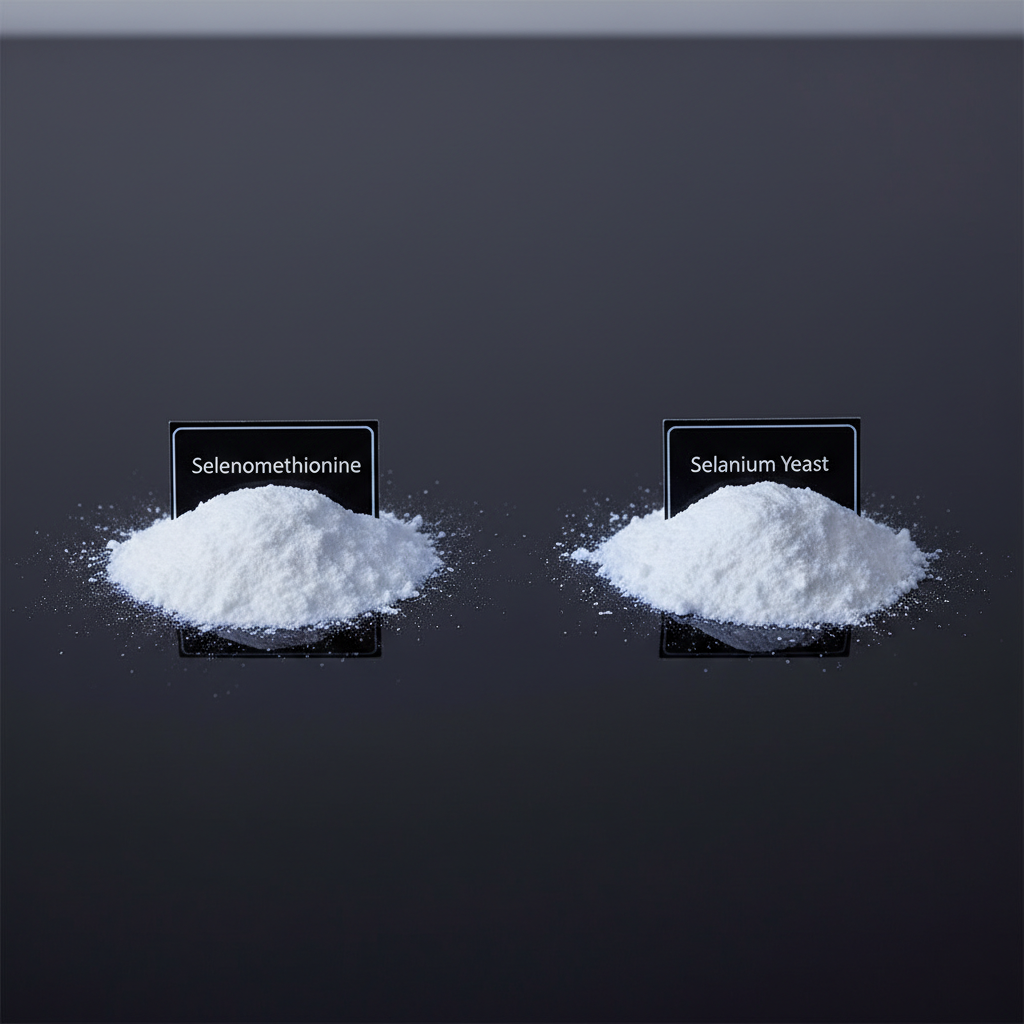
When considering selenium supplementation, two prominent organic forms frequently emerge: selenomethionine and selenium yeast. Both are highly bioavailable and effective at increasing the body's selenium status, but they differ fundamentally in their composition and the spectrum of selenium compounds they provide. Selenomethionine is a pure, isolated amino acid where selenium replaces sulfur, offering a standardized and predictable dose. In contrast, selenium yeast is a complex, food-form supplement derived from yeast grown in a selenium-rich medium, containing a natural blend of various seleno-compounds, including selenomethionine, selenocysteine, and other methylated forms.
What Each Is and How It Works
Understanding the distinct nature of selenomethionine and selenium yeast is crucial for making an informed choice about supplementation.
Selenomethionine: The Pure Compound
L-selenomethionine is an organic selenium compound in which the sulfur atom in the amino acid methionine is replaced by selenium. This form is naturally found in selenium-rich plants and is a primary way humans and animals incorporate selenium into their bodies. When ingested, selenomethionine is readily absorbed and can be directly incorporated into proteins in place of methionine. This unique characteristic allows it to serve as a storage form of selenium within the body's protein pool, providing a reservoir that can be drawn upon as needed for the synthesis of essential selenoproteins. Its purity means that each dose delivers a precise amount of selenium, making it highly predictable in its effects.
Selenium Yeast: The Food-Form Complex
Selenium yeast is produced by growing Saccharomyces cerevisiae (brewer's yeast) in a selenium-enriched environment. During this process, the yeast metabolizes inorganic selenium (like selenite) and incorporates it into various organic compounds, primarily selenomethionine, but also selenocysteine, methylselenocysteine, and other methylated selenium species. This results in a supplement that mimics the diverse forms of selenium found in foods. The advantage of selenium yeast lies in its 'whole food' nature, offering a spectrum of selenium compounds that may interact synergistically, similar to how nutrients are consumed in a natural diet. However, the exact proportion of each selenium species can vary between batches and manufacturers.
Evidence by Outcome
Both selenomethionine and selenium yeast have been extensively studied for their roles in human health, largely due to selenium's critical function in various physiological processes.
General Selenium Status and Antioxidant Defense
Both forms are highly effective at raising overall selenium levels in the body. Selenium is a vital component of selenoproteins, including glutathione peroxidases and thioredoxin reductases, which are key enzymes in the body's antioxidant defense system. By supporting these enzymes, both selenomethionine and selenium yeast contribute to reducing oxidative stress and protecting cells from damage. Studies consistently show that supplementation with either form can significantly increase plasma and erythrocyte selenium concentrations.
Thyroid Health Support
Selenium plays a crucial role in thyroid health, particularly in the metabolism of thyroid hormones. Selenoproteins, such as deiodinases, are responsible for converting inactive thyroid hormone (T4) into its active form (T3). Adequate selenium intake is therefore essential for optimal thyroid function. Both selenomethionine and selenium yeast have been shown to support healthy thyroid function, with research often utilizing selenomethionine due to its standardized nature. Evidence suggests that selenium supplementation may be beneficial for individuals with certain thyroid conditions, though more robust research is ongoing.
Immune System Function
Selenium is also critical for a robust immune response. It influences both innate and adaptive immunity, enhancing the function of immune cells like T-cells and natural killer cells. Both forms of selenium contribute to maintaining optimal immune function by ensuring the synthesis of selenoproteins involved in immune regulation and antioxidant defense. Preliminary evidence suggests that adequate selenium status may help the body respond more effectively to infections.
Other Potential Benefits
Research continues to explore selenium's role in other areas, including cardiovascular health and certain aspects of cellular proliferation. While some observational studies suggest associations between selenium status and these outcomes, intervention trials with supplements have yielded mixed results. It's important to note that selenium's effects are often context-dependent, and more robust human evidence is needed to draw definitive conclusions about supplementation benefits for these specific conditions.
Bioavailability and Dose-Form
Both selenomethionine and selenium yeast are recognized for their high bioavailability, meaning a significant portion of the ingested selenium is absorbed and utilized by the body.
Absorption Efficiency
Selenomethionine is absorbed with remarkable efficiency, often exceeding 90%. Its single-compound nature ensures consistent absorption. Once absorbed, it is readily incorporated into the body's protein pool, where it can be stored and released as needed. This makes selenomethionine a highly reliable form for predictable selenium delivery.
Selenium yeast also boasts high bioavailability, typically in the range of 80-90%. While slightly less consistent than pure selenomethionine due to its diverse composition, the various seleno-compounds within the yeast are still effectively absorbed and utilized. The body processes these compounds, converting them into forms that can be used for selenoprotein synthesis or stored.
Dosing and Forms
Typical daily doses for both forms range from 50 to 200 micrograms (mcg) of elemental selenium, depending on individual needs and health goals. Both selenomethionine and selenium yeast are commonly available in capsule or tablet form. The key difference in dosing lies in the standardization: selenomethionine supplements typically state the exact amount of L-selenomethionine, ensuring a precise elemental selenium dose. Selenium yeast supplements also state the elemental selenium content, but the underlying mix of seleno-compounds contributes to that total.
Safety and Interactions
Selenium, while essential, can be toxic in excessive amounts. Understanding the safety profile and potential interactions for both forms is crucial.
General Safety and Selenosis
Both selenomethionine and selenium yeast are generally considered safe when taken within recommended dosages. The tolerable upper intake level (UL) for selenium for adults is 400 mcg per day. Exceeding this limit consistently can lead to selenosis, a condition characterized by symptoms such as garlic-like breath odor, hair loss, brittle nails, skin lesions, fatigue, and neurological disturbances. It is critical not to exceed the UL without medical supervision.
Potential Interactions
Significant drug interactions with selenium supplements are rare. However, individuals undergoing certain chemotherapy treatments should consult their healthcare provider, as some research suggests potential interactions, though evidence is complex and not fully conclusive. As with any supplement, it's wise to discuss your intake with a doctor, especially if you are on medication or have pre-existing health conditions.
Allergies and Sensitivities
A specific consideration for selenium yeast is the potential for yeast allergies or sensitivities. Individuals with known allergies to yeast products should opt for selenomethionine to avoid adverse reactions. Selenomethionine, being a purified compound, generally carries a lower risk of allergic reactions related to its source material.
Who Should Pick Which
The choice between selenomethionine and selenium yeast often comes down to individual preferences, specific health goals, and any existing sensitivities.
Choose Selenomethionine If:
- You need precise dosing: Its pure, standardized nature makes it ideal for accurate and consistent selenium intake, often preferred in clinical research settings.
- You have a yeast allergy or sensitivity: As it's not derived from yeast, it avoids potential allergic reactions.
- You prioritize purity and simplicity: If you prefer a single, well-defined compound over a complex blend.
- You are looking for a reliable selenium reservoir: Its ability to be incorporated into proteins makes it an excellent long-term storage form.
Choose Selenium Yeast If:
- You prefer a 'whole food' approach: Its diverse array of seleno-compounds mimics the selenium found in natural food sources, potentially offering a broader range of benefits.
- You are not sensitive to yeast: It's a natural and effective option for most individuals.
- You are comfortable with a natural blend: If you value the synergistic potential of multiple selenium forms.
For most people simply looking to ensure adequate selenium intake and support general health, both forms are highly effective. The decision often hinges on personal preference for a pure compound versus a more natural, food-derived complex.
Practical Buying Notes
Regardless of whether you choose selenomethionine or selenium yeast, a few practical considerations can help ensure you purchase a high-quality supplement.
- Third-Party Testing: Look for brands that conduct third-party testing for purity, potency, and absence of contaminants. This provides an independent verification of what's in the bottle.
- Dosage Clarity: Ensure the label clearly states the amount of elemental selenium per serving (usually in mcg).
- Brand Reputation: Opt for reputable brands known for quality and transparency in their manufacturing processes.
- Ingredient List: Check for any unnecessary fillers, artificial colors, or allergens, especially if you have sensitivities.
- Cost-Effectiveness: Compare the cost per serving to find a product that fits your budget without compromising on quality.
Ultimately, both selenomethionine and selenium yeast are excellent choices for selenium supplementation. Your decision should be based on your specific needs, any dietary restrictions, and your preference for a pure compound versus a natural, food-derived complex.