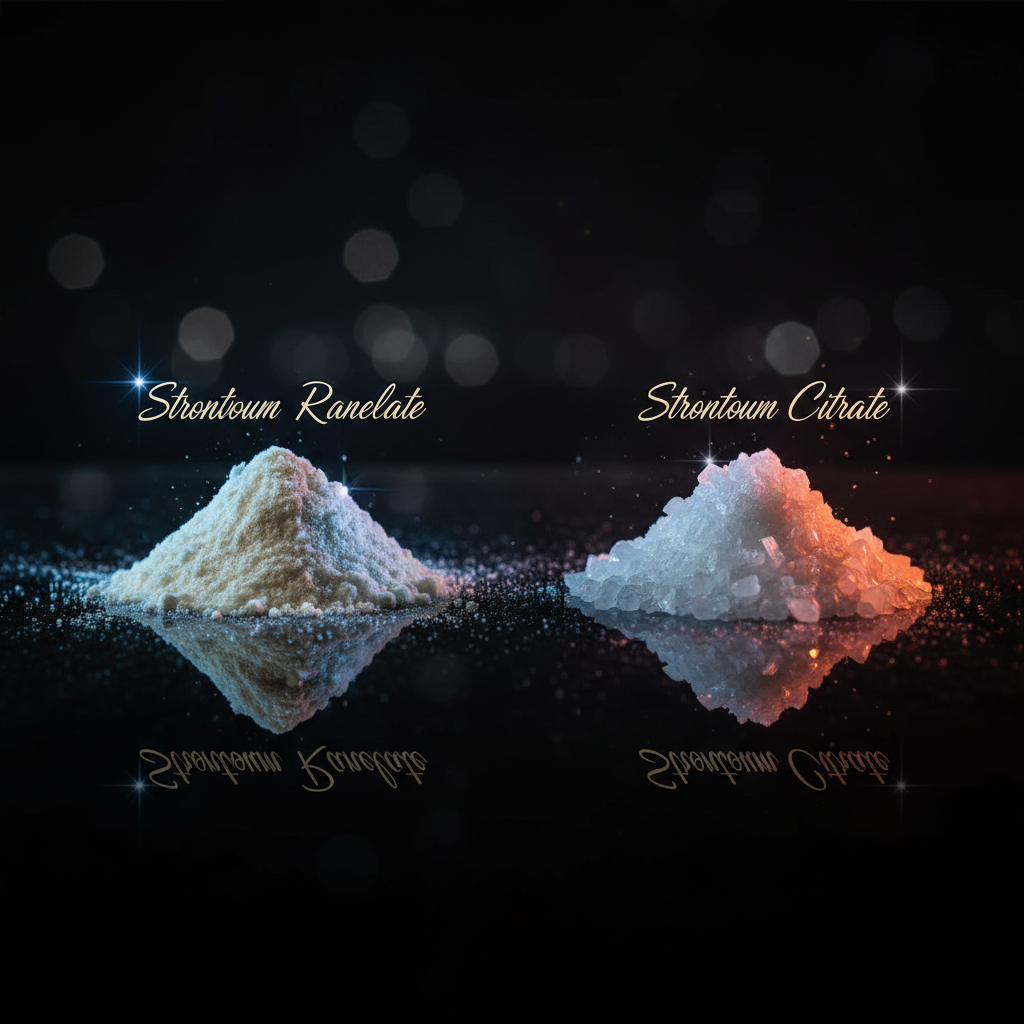
Strontium ranelate and strontium citrate are two distinct forms of strontium, a trace mineral, often discussed in the context of bone health. While both contain strontium, their chemical structures, regulatory statuses, mechanisms of action, and clinical evidence for efficacy and safety differ significantly. Strontium ranelate is a prescription medication primarily used in Europe for severe osteoporosis, whereas strontium citrate is widely available as a dietary supplement, often marketed for general bone support. Understanding these fundamental differences is crucial for anyone considering strontium supplementation, as their applications and potential risks are not interchangeable.
What are Strontium Ranelate and Strontium Citrate, and How Do They Work?
Strontium Ranelate: This is a pharmaceutical compound where two atoms of strontium are chelated with ranelic acid. It is a prescription drug, notably marketed as Protelos® or Protos® in some countries, specifically for the treatment of severe osteoporosis. Its mechanism of action is unique, often described as having a "dual effect" on bone metabolism. It is believed to simultaneously increase osteoblast activity (bone-forming cells) and decrease osteoclast activity (bone-resorbing cells). This dual action leads to a net increase in bone formation and a reduction in bone breakdown, thereby improving bone mineral density (BMD) and bone strength. The ranelic acid component is thought to facilitate the delivery of strontium to bone tissue and may have some biological activity itself, though the strontium ion is considered the primary active component responsible for the observed effects on bone remodeling. This precise chemical structure and targeted action distinguish it significantly from other strontium forms.
Strontium Citrate: In contrast, strontium citrate is a salt formed by strontium and citric acid, commonly sold as an over-the-counter dietary supplement. The strontium in strontium citrate is intended to be absorbed and incorporated into bone, where it can replace calcium ions in the bone matrix. While strontium is chemically similar to calcium, its larger atomic size may influence bone crystal structure and potentially alter bone strength or quality. The precise mechanism by which supplemental strontium citrate might support bone health is less well-defined and less rigorously studied than that of strontium ranelate. Proponents suggest it may contribute to bone mineral density by its incorporation into the bone matrix, but robust clinical trials demonstrating a dual action or fracture risk reduction comparable to ranelate are lacking. It is generally understood to act as a source of elemental strontium, which is then handled by the body, with its effects largely extrapolated from the known actions of strontium in general, rather than specific studies on the citrate form.
Evidence by Outcome: Clinical Efficacy Compared
Strontium Ranelate: The efficacy of strontium ranelate has been extensively studied in large, randomized, placebo-controlled clinical trials, particularly in postmenopausal women with osteoporosis. Key studies, such as the SOTI (Strontium Ranelate in Osteoporosis Treatment International) and TROPOS (Treatment of Peripheral Osteoporosis) trials, demonstrated that strontium ranelate significantly reduced the risk of vertebral and non-vertebral fractures. These trials showed improvements in bone mineral density at various skeletal sites and a reduction in the incidence of new fractures over several years of treatment. Based on this robust evidence, strontium ranelate was approved as a prescription medication for the treatment of severe osteoporosis in many European countries. Its use is typically reserved for patients who cannot tolerate or are contraindicated for other osteoporosis treatments, or for those with specific risk factors. The evidence base for strontium ranelate is considered strong and supports its role in managing severe osteoporosis under strict medical supervision.
Strontium Citrate: For strontium citrate, the scientific evidence supporting its efficacy for preventing or treating osteoporosis, particularly in terms of fracture risk reduction, is considerably weaker. Most studies on strontium citrate are smaller, observational, or animal-based, and do not possess the same rigor or scale as the trials conducted for strontium ranelate. While some preliminary research and anecdotal reports suggest that strontium citrate may increase bone mineral density, there is no robust human evidence from large-scale, placebo-controlled trials to confirm its ability to reduce fracture risk in humans. Therefore, it cannot be considered an equivalent or alternative treatment for osteoporosis to strontium ranelate. Consumers should be aware that claims of efficacy for strontium citrate are largely extrapolated from the research on strontium ranelate or based on limited data. The regulatory landscape also reflects this difference; strontium citrate is sold as a dietary supplement, which does not require pre-market approval for efficacy from regulatory bodies like the FDA. For more information on various bone health supplements, you can explore articles on bone health supplements and their specific evidence bases.
Bioavailability, Dosing, and Formulations
Strontium Ranelate: Strontium ranelate is specifically formulated to optimize its absorption. It is typically taken as a sachet containing granules to be dissolved in water, usually at bedtime and at least two hours after eating, especially after consuming calcium-rich foods or supplements. This timing is crucial because calcium can significantly interfere with strontium absorption, reducing its bioavailability. The bioavailability of strontium from ranelate is estimated to be around 25-30% when taken under optimal conditions, ensuring a consistent therapeutic dose reaches the bloodstream. The standard therapeutic dose is 2 grams of strontium ranelate per day, which delivers approximately 680 mg of elemental strontium. This precise dosing and administration schedule are critical for achieving the therapeutic concentrations observed in clinical trials and for maximizing its intended pharmacological effects.
Strontium Citrate: The bioavailability of strontium from strontium citrate supplements can be highly variable and is generally not as well-characterized as that of strontium ranelate. Factors such as the specific formulation (e.g., capsule, tablet, powder), the presence of food, and individual digestive differences can all influence absorption. Many strontium citrate supplements provide doses ranging from 300 mg to 1000 mg of elemental strontium per serving. Like ranelate, strontium citrate absorption is also significantly hindered by calcium. Therefore, it is often recommended to take strontium citrate supplements several hours apart from calcium-containing foods or supplements to avoid competition for absorption pathways. Due to the lack of standardized clinical trials for strontium citrate, there isn't a universally established "therapeutic" dose for bone health support, and dosages are often based on manufacturer recommendations or general guidelines for elemental strontium intake. Consumers should exercise caution and discuss appropriate dosing with a healthcare provider, especially given the variability in product formulations and the absence of robust efficacy data. Further research into the optimal dosing and absorption characteristics of strontium in supplement form is ongoing.
Safety Profiles and Potential Interactions
Strontium Ranelate: Due to its potent pharmacological effects, strontium ranelate has a well-documented safety profile, including significant risks that led to restrictions on its use. The most serious concerns include an increased risk of cardiovascular events, such as myocardial infarction (heart attack), and venous thromboembolism (VTE), including deep vein thrombosis and pulmonary embolism. It has also been associated with severe hypersensitivity reactions, including Drug Reaction with Eosinophilia and Systemic Symptoms (DRESS) syndrome, which can be life-threatening. Consequently, its use is contraindicated in patients with established ischemic heart disease, peripheral arterial disease, cerebrovascular disease, or uncontrolled hypertension. Regular medical monitoring, including cardiovascular assessment, is required for patients on strontium ranelate, and its prescription is carefully managed by specialists.
Strontium Citrate: The safety profile of strontium citrate, as an over-the-counter supplement, is less comprehensively studied than that of strontium ranelate. While generally considered safe for short-term use at recommended doses by healthy individuals, long-term safety data, especially concerning cardiovascular risks or other serious adverse events, are limited. Some individuals may experience mild gastrointestinal upset, such as nausea or diarrhea, particularly when first starting supplementation. A primary concern with any strontium supplement is the potential for strontium accumulation in bone over time, which could theoretically affect bone quality, although the clinical significance of this with typical supplement doses is not fully understood. It is crucial to note that the cardiovascular and thrombotic risks identified with strontium ranelate have not been definitively linked to strontium citrate in human trials, but the lack of extensive research means these possibilities cannot be entirely ruled out, particularly with high doses or prolonged use. Individuals with kidney impairment should avoid strontium citrate, as strontium is primarily excreted by the kidneys, and accumulation could become toxic.
General Interactions: Both forms of strontium can interact with calcium and magnesium, as these minerals compete for absorption in the gut. Therefore, it is generally advised to take strontium supplements several hours apart from calcium or magnesium supplements and dairy products to maximize absorption. Strontium may also interfere with certain diagnostic tests, such as bone density scans (DEXA), by artificially inflating BMD readings due to its higher atomic weight compared to calcium, potentially leading to misleading results about true bone mineral density. Patients should inform their healthcare providers about any strontium supplementation before undergoing DEXA scans.
Who Should Consider Which Form of Strontium?
Strontium Ranelate: This form of strontium is strictly a prescription medication. It is typically considered for patients with severe postmenopausal osteoporosis who are at high risk of fracture, especially those for whom other osteoporosis treatments (like bisphosphonates) are unsuitable or ineffective. Its use is carefully weighed against its known risks, particularly cardiovascular and thrombotic events, and requires close medical supervision by a specialist. It is not available as an over-the-counter supplement and should never be self-prescribed or obtained without a doctor's guidance. Its application is highly specific and medically managed.
Strontium Citrate: Strontium citrate is available as a dietary supplement and is often chosen by individuals looking for general bone health support, particularly those who are not diagnosed with osteoporosis or who prefer a non-prescription option. However, it is vital to understand that strontium citrate is not a substitute for strontium ranelate or other evidence-based treatments for osteoporosis. Individuals considering strontium citrate should consult with a healthcare professional, especially if they have underlying health conditions, are taking other medications, or are pregnant or breastfeeding. It is not recommended for individuals with kidney impairment, as strontium is primarily excreted by the kidneys, and accumulation could be a concern. Furthermore, given the limited robust evidence for its efficacy in fracture prevention, it should not be relied upon as a primary treatment for diagnosed bone conditions.
Practical Considerations for Supplementation
When considering any form of strontium, particularly strontium citrate as a supplement, several practical points are paramount. Firstly, always consult with a healthcare professional before starting any new supplement, especially if you have a pre-existing medical condition, are taking other medications, or have concerns about bone health. They can help assess whether strontium is appropriate for your individual needs and advise on potential interactions or contraindications. Secondly, be mindful of the quality and purity of strontium citrate supplements. Look for reputable brands that provide third-party testing for purity and potency, as supplement quality can vary significantly. Thirdly, pay close attention to dosing and administration instructions. To maximize absorption, take strontium supplements several hours away from calcium-containing foods, dairy products, or calcium supplements. This separation is critical for ensuring that the strontium is absorbed effectively. Finally, remember that dietary supplements are not regulated with the same rigor as prescription drugs. Claims made about strontium citrate may not be backed by the same level of scientific evidence as those for strontium ranelate. A balanced diet rich in calcium and vitamin D, along with regular weight-bearing exercise, remains fundamental for maintaining strong bones and should always be prioritized alongside any supplementation strategy. Do not view supplements as a replacement for a healthy lifestyle or prescribed medical treatments.