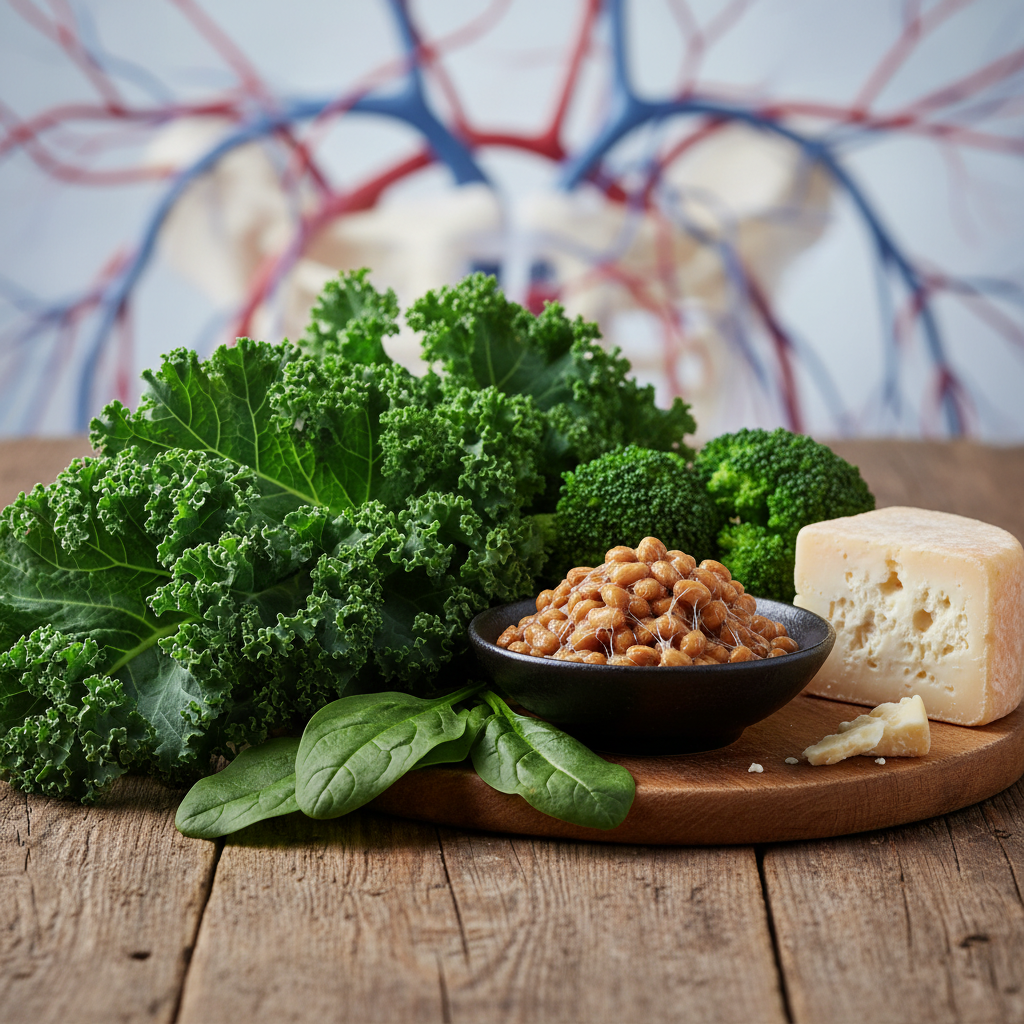
While often grouped under the umbrella term 'Vitamin K,' Vitamin K1 (phylloquinone) and Vitamin K2 (menaquinone) are distinct compounds with different dietary sources, metabolic pathways, and primary physiological roles. The fundamental difference between vitamin K1 vs K2 lies in their molecular structure and how the body utilizes them: K1 is predominantly involved in blood coagulation, while K2 plays a crucial role in calcium metabolism, supporting bone health and cardiovascular integrity by directing calcium to the right places. Understanding these distinctions is vital for optimizing your intake and leveraging the specific health benefits each form offers.
What Each Is and How It Works
Vitamin K is a fat-soluble vitamin critical for the post-translational modification of specific proteins, enabling them to bind calcium. This carboxylation process is essential for their biological function. However, the two main forms, K1 and K2, achieve this in different tissues and with varying efficiencies.
Vitamin K1 (Phylloquinone)
Phylloquinone, commonly known as Vitamin K1, is the primary form of vitamin K found in plants. It is abundant in green leafy vegetables such such as spinach, kale, collard greens, and broccoli. Upon consumption, K1 is primarily absorbed in the small intestine and rapidly transported to the liver. Its most well-established role is in the synthesis of several blood coagulation factors (specifically factors II, VII, IX, and X) and anticoagulant proteins (Protein C and Protein S). In the liver, K1 acts as a cofactor for the enzyme gamma-glutamyl carboxylase (GGCX), which modifies specific glutamic acid residues on these proteins, enabling them to bind calcium and initiate the clotting cascade. Without sufficient K1, the blood's ability to clot effectively is impaired, leading to excessive bleeding. Due to its rapid metabolism and preferential uptake by the liver, K1's systemic distribution to other tissues is limited.
Vitamin K2 (Menaquinone)
Menaquinone, or Vitamin K2, is a family of compounds characterized by varying lengths of isoprenoid side chains, denoted as MK-n (where 'n' indicates the number of isoprenoid units). The most studied and biologically relevant forms are MK-4 and MK-7.
- MK-4 (Menaquinone-4): This short-chain menaquinone is found in animal products like meat, eggs, and high-fat dairy. It can also be synthesized endogenously from K1 in certain tissues, though the efficiency and significance of this conversion in humans are debated. MK-4 has a relatively short half-life in the body, requiring higher doses or more frequent intake to maintain consistent levels.
- MK-7 (Menaquinone-7): This long-chain menaquinone is primarily found in fermented foods, most notably natto (a traditional Japanese fermented soybean dish), and some cheeses. It is also produced by certain bacteria in the human gut. MK-7 boasts superior bioavailability and a significantly longer half-life compared to K1 and MK-4, allowing it to circulate in the blood for extended periods and reach extrahepatic tissues more effectively.
The primary roles of K2 extend beyond blood clotting. It is crucial for activating two key proteins: Matrix Gla Protein (MGP) and osteocalcin. MGP is a potent inhibitor of soft tissue calcification, particularly in arteries and cartilage. When activated by K2, MGP binds to calcium and prevents its deposition in these areas. Osteocalcin, on the other hand, is a protein produced by osteoblasts (bone-building cells) that, once activated by K2, helps integrate calcium into the bone matrix, thereby strengthening bones. This dual action of K2 – preventing calcification in soft tissues and promoting it in bones – highlights its unique importance for skeletal and cardiovascular health.
Evidence by Outcome: Bone Health
The roles of Vitamin K1 and K2 diverge significantly when it comes to bone health. While K1 is indirectly involved in general physiological processes that support overall health, its direct impact on bone mineral density and fracture risk is not well-established.
In contrast, Vitamin K2 has garnered substantial attention for its profound effects on bone metabolism. By activating osteocalcin, K2 ensures that calcium is properly utilized and integrated into the bone structure. Numerous studies, particularly those focusing on MK-4 and MK-7, have investigated K2's potential to improve bone mineral density (BMD) and reduce fracture risk. Observational studies have consistently shown an association between higher dietary intake of K2 (especially MK-7) and reduced risk of fractures and osteoporosis. Intervention trials, particularly in postmenopausal women, have demonstrated that K2 supplementation can slow the rate of bone loss, improve bone strength, and in some cases, even increase BMD. For instance, some research suggests that MK-7 supplementation can significantly reduce the incidence of vertebral fractures and hip fractures in osteoporotic patients. The synergy between Vitamin K2 and Vitamin D is also critical; Vitamin D facilitates calcium absorption, while K2 ensures that this absorbed calcium is directed to the bones where it's needed, rather than accumulating in soft tissues.
Evidence by Outcome: Cardiovascular Health
When it comes to cardiovascular health, the distinction between Vitamin K1 and K2 becomes even more pronounced. Vitamin K1 has no direct evidence supporting a role in preventing cardiovascular disease or arterial calcification.
Vitamin K2, however, is emerging as a critical nutrient for maintaining arterial flexibility and preventing vascular calcification. The activation of Matrix Gla Protein (MGP) by K2 is central to this benefit. Uncarboxylated MGP cannot bind calcium, allowing it to deposit in arterial walls, leading to arterial stiffness and atherosclerosis. Activated (carboxylated) MGP, however, effectively sequesters calcium, preventing its harmful accumulation in soft tissues. Observational studies, such as the Rotterdam Study, have linked higher dietary intake of K2 (specifically MK-7 and MK-9) with a significantly reduced risk of arterial calcification, aortic calcification, and lower incidence of cardiovascular events and mortality. Intervention studies, though fewer, have shown promising results, with K2 supplementation demonstrating the ability to slow the progression of arterial calcification and even improve arterial elasticity in some populations. While the evidence is still accumulating, K2's role in actively protecting against vascular calcification positions it as a key nutrient for cardiovascular health, distinct from K1's primary role in blood clotting.
Bioavailability and Dose-Form Differences
The efficacy of any nutrient is heavily dependent on its bioavailability – how well it is absorbed and utilized by the body. Here, Vitamin K1 and K2 exhibit significant differences.
Vitamin K1 Bioavailability
Vitamin K1 from plant sources, particularly leafy greens, has relatively poor bioavailability. Only about 5-15% of the K1 present in vegetables is absorbed. This is largely due to its tight binding within chloroplasts, which are not easily broken down during digestion. Cooking and consuming K1-rich foods with dietary fats can modestly improve absorption. Once absorbed, K1 has a short half-life of approximately 1-2 hours and is rapidly cleared from the bloodstream, primarily taken up by the liver for its role in coagulation. This rapid clearance and liver-centric distribution limit its systemic availability to other tissues.
Vitamin K2 Bioavailability
The bioavailability of K2 varies by its specific menaquinone form:
- MK-4: While found in animal products, MK-4 also has a relatively short half-life (a few hours) and requires higher doses to achieve systemic effects. Its absorption is generally better than K1, especially when consumed with fats.
- MK-7: This form stands out for its superior bioavailability and remarkably long half-life, which can extend up to 72 hours (3 days). This means that MK-7 remains in circulation for much longer, allowing for more stable blood levels and effective distribution to extrahepatic tissues like bones and arteries. Its longer isoprenoid side chain is thought to contribute to its enhanced absorption and reduced clearance. This extended presence makes MK-7 a highly effective form for systemic benefits, often requiring lower, once-daily doses compared to MK-4.
For both K1 and K2, consuming them with dietary fat significantly enhances absorption, as they are fat-soluble vitamins. This is why K-rich vegetables are often recommended with a dressing or oil, and K2 from animal products or fermented foods (which often contain fats) is well-absorbed.
Safety, Interactions, and Side Effects
Both Vitamin K1 and K2 are generally considered safe for consumption, with no known upper limit for intake from food or supplements in healthy individuals. Adverse effects are rare, even at high doses.
However, the most critical consideration for vitamin K intake, regardless of the form, is its interaction with anticoagulant medications, particularly warfarin (Coumadin). Warfarin functions as a vitamin K antagonist, meaning it inhibits the enzyme responsible for recycling vitamin K, thereby reducing the synthesis of active clotting factors. Therefore, individuals taking warfarin must maintain a consistent daily intake of vitamin K to ensure stable INR (International Normalized Ratio) levels. Sudden changes in vitamin K intake, whether from food or supplements (K1 or K2), can either reduce warfarin's effectiveness (too much K) or increase bleeding risk (too little K). It is imperative for anyone on warfarin to consult their healthcare provider before making significant dietary changes or starting any vitamin K supplement. It is important to note that newer oral anticoagulants (DOACs) like apixaban, rivaroxaban, and dabigatran work through different mechanisms and are generally not affected by vitamin K intake.
Beyond warfarin, other potential interactions are less common. Orlistat, a medication used for weight loss that blocks fat absorption, can reduce the absorption of fat-soluble vitamins, including vitamin K. Similarly, bile acid sequestrants (e.g., cholestyramine) used to lower cholesterol can interfere with vitamin K absorption. Side effects from vitamin K supplementation are rare and typically mild, such as mild gastrointestinal upset at very high doses. Allergic reactions are exceedingly uncommon.
Who Should Pick Which Vitamin K Form?
The choice between focusing on Vitamin K1 or K2, or supplementing with one or both, depends largely on individual dietary habits, health goals, and existing medical conditions.
Who Needs Vitamin K1?
Everyone needs adequate Vitamin K1 for its foundational role in blood clotting. For most healthy individuals, a diet rich in green leafy vegetables provides sufficient K1 to meet this essential requirement. Supplementation with K1 is generally not necessary unless there is a diagnosed deficiency, malabsorption issue, or specific medical indication, and should always be done under medical supervision. Individuals on warfarin need to be particularly mindful of consistent K1 intake from their diet.
Who Should Consider Vitamin K2?
Given its distinct systemic benefits, Vitamin K2 (especially MK-7) is often recommended for specific populations:
- For Bone Health: Individuals at risk for osteoporosis, postmenopausal women, or those looking to support overall bone density and strength. K2 works synergistically with Vitamin D and calcium to ensure proper bone mineralization. Athletes or individuals with bone stress may also find K2 beneficial.
- For Cardiovascular Health: People concerned about arterial calcification, arterial stiffness, or maintaining long-term cardiovascular integrity. This includes individuals with a family history of heart disease or those with risk factors for atherosclerosis.
- Dietary Gaps: Those who do not regularly consume K2-rich foods like natto, certain fermented cheeses, or animal products. Vegetarians and vegans, in particular, may have lower dietary K2 intake and could benefit from supplementation.
- Synergy with Vitamin D: Individuals supplementing with Vitamin D, especially at higher doses, often consider adding K2 to ensure that calcium is directed to the bones and away from soft tissues.
- General Wellness: As research continues to uncover K2's roles in various tissues beyond bone and arteries (e.g., brain, kidneys, reproductive health), some individuals may choose K2 for broader health support.
In summary, while K1 is essential for basic coagulation, K2 offers targeted benefits for bone and cardiovascular health that K1 does not. For systemic health benefits beyond blood clotting, K2, particularly the MK-7 form, is generally the preferred choice for supplementation.
Practical Considerations for Supplementation
If you decide to supplement with Vitamin K, especially K2, there are several practical points to consider to maximize its effectiveness and safety.
Dosing
The Recommended Dietary Allowance (RDA) for Vitamin K (primarily K1) is 90 mcg per day for adult women and 120 mcg per day for adult men. There is no official RDA for Vitamin K2, reflecting the ongoing research into its optimal intake for various health outcomes. Typical supplemental doses for K2 (MK-7) range from 100 mcg to 300 mcg per day, with some studies using up to 360 mcg. For MK-4, due to its shorter half-life, higher doses (e.g., 1-5 mg, often divided throughout the day) are sometimes used in research, though it is less commonly found as a standalone supplement for general health.
Form of K2
When selecting a K2 supplement, look for MK-7. It is generally considered the most effective form for systemic benefits due to its superior bioavailability and long half-life. Furthermore, look for supplements that specify